Appeals court rules against the tariffs

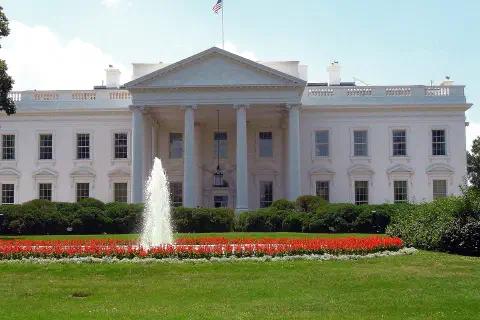
The US Court of Appeals for the Federal Circuit (CAFC) ruled 7–4 on 29 August that the administration's across-the-board tariffs, imposed under the International Emergency Economic Powers Act (IEEPA), were unlawful and went beyond the president's statutory powers. It is a historic legal defeat for the White House's trade policy.
The full court was upholding a decision by the Court of International Trade in May, which had also found the tariffs unlawful. As then, nothing changes immediately: the judges left the duties in place until 14 October so that the government can appeal to the Supreme Court, which the president has said he will do. Importers will keep paying in the meantime.
What the court struck down
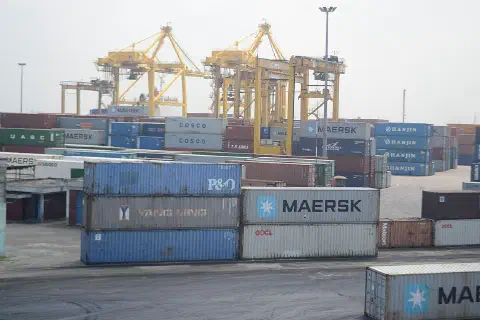
The ruling covers two sets of duties. The first is the so-called reciprocal tariffs announced in April, a 10 per cent baseline on almost all imports plus higher country-specific rates that took effect in August. The second is the tariffs on Canada, Mexico and China justified by the flow of fentanyl across American borders. Both rested on IEEPA, a 1977 law that lets the president regulate transactions during a declared national emergency. Presidents had used it for decades to freeze assets and impose sanctions, but none before this one had used it to levy tariffs, which the Constitution assigns to Congress.
Tariffs imposed under other statutes are untouched. The duties on steel, aluminium, cars and copper were levied under Section 232 of the Trade Expansion Act of 1962 on national-security grounds, after investigations by the Commerce Department. They are narrower, slower to impose and on firmer legal ground. The majority's point was that IEEPA's power to regulate imports does not stretch to open-ended taxes on the whole of American trade.

An old precedent stretched too far
The government's case leaned on Richard Nixon. In 1971 he imposed a 10 per cent surcharge on imports under the Trading with the Enemy Act, IEEPA's predecessor, and an appeals court later upheld it. That surcharge was temporary, uniform and tied to a balance-of-payments crisis. The current tariffs are none of those things, and the majority treated the difference as decisive. The dissenters read the statute more broadly, which is why the Supreme Court's view is genuinely uncertain.
Refunds could top $100 billion
The ruling makes a mess of the government's fiscal sums. The emergency tariffs have raised tens of billions of dollars in gross customs receipts since they were imposed. By finding that they had no legal basis, the court has invited a wave of refund claims from companies. If the Supreme Court upholds the decision, the government could be forced to hand more than $100 billion in duties back to importers.
The money would flow to the importers of record, the companies that paid the duty at the border, not to the consumers who absorbed some of it through higher prices. Refunds normally run through Customs and Border Protection's process for finalising the duty owed on each entry, and firms have already begun lodging claims to preserve their rights. For retailers and manufacturers that swallowed the cost in their margins, a refund would be a windfall booked in a single quarter.
More bonds to sell
For bond desks the problem is financing. Tariffs had become a significant source of revenue, offsetting part of the widening federal deficit. If $100 billion of lost tariff revenue has to be replaced with borrowing, the Treasury will have to raise the size of its coupon auctions, and quickly.

The timing is poor. The deficit was about $1.8 trillion in the last fiscal year, and the tax and spending law signed on 4 July adds to future shortfalls. The Congressional Budget Office had counted the new tariffs as a large offset to those deficits over the coming decade. Take them away and the gap has to be filled by debt, most of it at the longer maturities that the Treasury has so far been reluctant to increase.
The Treasury's own guidance makes the adjustment awkward. In its recent refunding statements it has said it expects to keep the sizes of its note and bond auctions steady for at least several quarters, leaning on Treasury bills to absorb swings in borrowing. A refund bill of this size, on top of a permanent loss of revenue, would stretch that approach. Bills can cover a one-off payment; they are a poor way to finance a lasting hole in revenue.
Plan B for the White House
The strongest argument against the fiscal alarm is that the administration has other tools. Section 122 of the Trade Act of 1974 allows tariffs of up to 15 per cent for 150 days to deal with balance-of-payments problems. Section 301 permits duties against unfair trade practices after an investigation, and Section 232 can be extended to new industries, as it already has been for copper and is being examined for others. Section 338 of the Tariff Act of 1930 has never been used in modern times, but it permits duties of up to 50 per cent on countries that discriminate against American commerce.
None of these is a perfect substitute. Most require investigations, time limits or product-by-product findings, which would make the tariff wall patchier and slower to rebuild. Revenue would dip during the transition and refunds on past duties would still be owed. Trading partners that signed deals under the threat of IEEPA tariffs, including the European Union and Japan, would also have reason to ask what they are now paying for.
Waiting for the justices
The dates to watch are the government's petition to the Supreme Court, whether the justices agree to hear the case quickly, and the 14 October deadline, which could be extended if they take it up. Monthly customs receipts in the Treasury's statements will show how much is at stake as the case proceeds. If the Supreme Court sides with the CAFC, the administration loses its biggest new source of revenue, and the Treasury will face a large refund bill and heavier borrowing, most of it funded through bigger auctions of coupon debt.
Write to Arnav Goel at contact@thelombardreview.com
The Sunday Edition, in your inbox
India's economy, markets and money every Sunday, plus our analysis twice a week. Free.
Unsubscribe any time. See our Privacy Notice.