Big Tech's AI spending passes $600bn
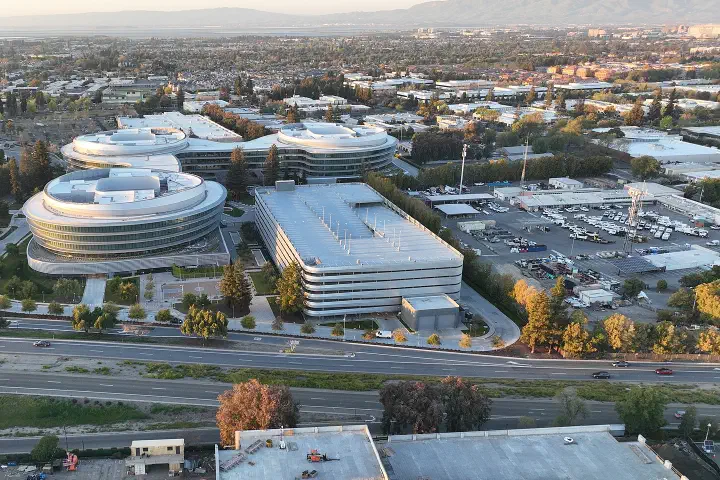
Microsoft, Alphabet, Meta and Amazon together now expect to spend more than $600 billion on capital projects in 2026, according to guidance given with their fourth-quarter results. Never has so much capital been poured into computing so quickly. Three years after the launch of ChatGPT set off the race, the four companies are spending on data centres at a pace once associated with national infrastructure programmes.
Spending outpaces cash flow
For the first time in the internet era, Big Tech's planned spending on infrastructure is set to grow faster than its operating cash flow. The bill covers gigawatt-scale data centre campuses, custom chips, liquid cooling and small modular nuclear reactors. To pay for it, the companies are borrowing heavily and cutting back share buybacks. Meta and Alphabet both raised large sums in the bond market in the second half of 2025, and Meta moved much of the cost of its Hyperion campus in Louisiana into a joint venture with Blue Owl Capital, keeping the debt off its own balance sheet.
The four are not the only ones spending. OpenAI announced its Stargate venture with SoftBank and Oracle a year ago, and it has since signed computing contracts worth hundreds of billions of dollars with Oracle, Microsoft, Amazon and chip suppliers. Nvidia has said it intends to invest up to $100 billion in OpenAI, which will in turn buy Nvidia systems. Arrangements in which a supplier finances its own customer have made some investors uneasy, because they can make demand look sturdier than the end market alone would justify. The cost of insuring Oracle's debt against default rose sharply late last year as it borrowed to build capacity for OpenAI, the first sign that credit markets are pricing the risk.
Where the money goes
The largest share of the bill goes to a small group of suppliers. Nvidia sells most of the accelerators, while chipmakers such as Broadcom help design the custom processors that each company hopes will reduce its dependence on Nvidia. Behind them sit the memory makers, the builders of electrical switchgear and cooling systems, and the utilities that must connect campuses drawing as much power as a mid-sized city. Every dollar of that spending is revenue for someone else today, while the return to the spender arrives, if at all, over the life of the equipment.
Power has become the binding constraint. Utilities face long queues of projects waiting to connect to the grid, and manufacturers of gas turbines and large transformers are booked for years. That is why the companies have signed long-term deals with nuclear operators, including Microsoft's agreement to restart a reactor at Three Mile Island, and why some campuses are being built with their own gas-fired generation. Households are feeling it too: rising electricity bills in regions with heavy data-centre construction became a campaign issue in last November's state elections in Virginia and New Jersey.
Depreciation is the slow fuse
The accounting is where the strain will show. Buildings are written off over decades, but servers and chips are depreciated over a handful of years, and in recent years Microsoft and Alphabet lengthened the assumed useful life of their servers to six years, which flattered reported profits. On a straight-line basis every $6 billion of servers adds $1 billion a year to depreciation for six years, so a spending surge of this size lifts the annual charge steadily for the rest of the decade. If a new generation of chips makes today's equipment obsolete sooner than planned, the companies will have to shorten those lives and take the hit to earnings at once.
Waiting for the revenue
Spending $600 billion a year only earns a decent return on invested capital (ROIC) if sales of business software grow much faster than they do now. If AI does not lift corporate productivity enough to bring in hundreds of billions of dollars in new high-margin subscriptions, depreciation will eat into earnings on a scale not seen before. The closest precedent is the telecoms boom of the late 1990s, when carriers borrowed to lay fibre-optic cable on the assumption that internet traffic would keep compounding. Traffic did grow, but not fast enough to service the debt, and WorldCom and Global Crossing collapsed in 2002 while much of the fibre sat unlit for years.
The efficiency risk
A different threat comes from the technology itself. A year ago the Chinese start-up DeepSeek released a model that matched leading American systems at a fraction of the reported training cost, and Nvidia suffered the largest one-day loss of market value in the history of the American stock market. Prices recovered as the big buyers kept spending, on the argument that cheaper AI would increase total demand for computing, much as more efficient steam engines in the nineteenth century increased coal consumption rather than reducing it. That argument has held so far. If it fails, and efficiency gains cut the computing needed for each task faster than usage grows, the new data centres will earn less per chip than their builders assumed.
Why this is not 1999
The counterargument is strong. Unlike the telecoms carriers, these four companies generate enormous operating cash flow from existing businesses, carry modest debt relative to their earnings, and have repeatedly told investors that demand for AI computing is running ahead of the capacity they can install. Their cloud divisions can also rent spare capacity to other firms, so a shortfall in their own AI products would not leave the data centres empty. That makes a solvency crisis unlikely, but a disappointing return on capital remains possible, and shareholders would feel it through lower free cash flow long before any bondholder did.
The figures to watch each quarter are cloud revenue growth at Azure, Google Cloud and Amazon Web Services, the backlog of contracted cloud revenue, free cash flow after capital spending, and the pace of buybacks. A widening of the credit spreads on the companies' own bonds would signal that lenders, too, have begun to doubt the arithmetic. Big Tech is betting its cash flows that demand for computing will keep compounding. If enterprise AI revenue lags, investors will probably see it first in depreciation charges and shrinking buybacks over the next two years.
Write to Arnav Goel at contact@thelombardreview.com
The Sunday Edition, in your inbox
India's economy, markets and money every Sunday, plus our analysis twice a week. Free.
Unsubscribe any time. See our Privacy Notice.