Diwali: India's festive boom runs on credit
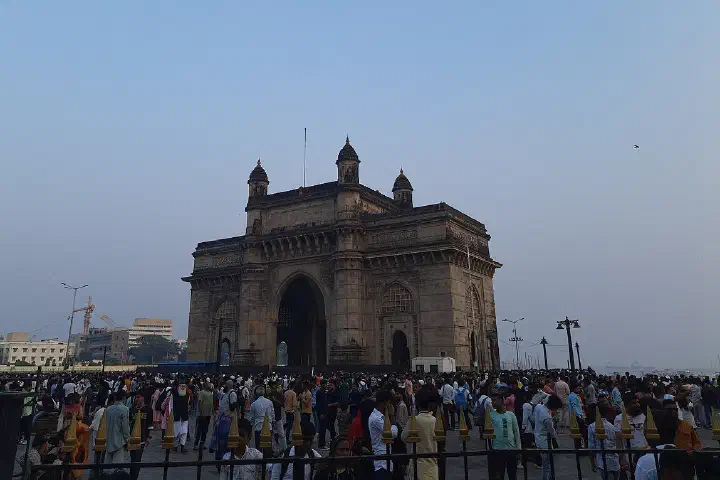
Car dealers, electronics retailers and jewellers across India reported record sales over Diwali, helped along by the fastest growth of any major economy. The festive spending boom was large even by Indian standards. A look at how it was paid for is less cheering. More and more of India's retail spending is being funded with consumer credit.
A strong economy behind it
The boom has solid roots. India's economy grew by 7.8 per cent year-on-year in the April-to-June quarter, the first quarter of the fiscal year, outpacing China and every other large economy. Government spending on roads, railways and ports has been heavy, corporate balance sheets are healthier than they were a decade ago, and stockmarkets have been strong. The Reserve Bank of India has held its policy rate at 6.5 per cent since February, and inflation has come down from the spike caused by vegetable prices in the summer. For many urban households, conditions for spending look good.
Unsecured loans grow fast
Banks and non-bank financial companies (NBFCs) have been growing their unsecured personal loan and credit card books at annual rates above thirty per cent. The Reserve Bank of India has become uneasy. It has raised risk weights on unsecured consumer loans, so that banks must hold more capital against them. Consumption paid for with high-interest personal debt leaves the financial system exposed when growth slows.
The growth has been driven by technology as much as demand. Digital lending apps, fintech partnerships with banks and instant approval through India's digital payments infrastructure have made small personal loans and buy-now-pay-later schemes available at the checkout, often to borrowers with thin credit histories. A phone, a television or a two-wheeler can be financed in minutes. That convenience brings in new customers, but it also means lenders are extending credit faster than they can observe how those customers behave in a downturn.

The calendar muddies the data. Diwali fell on 12 November this year, nearly three weeks later than in 2022, so festive buying has shifted between months and comparisons of October or November with a year earlier are distorted. Car registrations, card spending and loan disbursements need to be read across the whole festive season. Month-by-month figures can make a slowdown in borrowing look temporary, or a spurt look larger than it is.
Measuring the credit elasticity
The question for a quantitative view is how much of the festive spending depends on credit. When unsecured lending grows at thirty per cent a year and consumer spending grows much more slowly, the share of consumption financed by borrowing is rising. That relationship, the elasticity of spending to credit, matters because it runs in both directions. If lenders slow the flow of new loans, spending that relied on them falls too, and the effect is concentrated in the same categories that did well this Diwali: cars, appliances and electronics.
Household balance sheets point the same way. Official data published in September showed that households' net financial savings fell last year to their lowest share of GDP in nearly five decades, as borrowing rose faster than savings. Some of that borrowing went into housing, which is backed by an asset. Much of the growth in unsecured credit is not, and it is usually taken on by younger, lower-income borrowers who have less cushion if they lose a job.
Lessons from past booms
India has seen credit booms end badly before. In 2010 the microfinance industry in Andhra Pradesh collapsed after rapid lending led to over-indebtedness and a state ordinance halted collections. In 2018 the default of IL&FS, a large infrastructure lender, froze funding for NBFCs across the country and forced many to cut lending sharply. Further afield, South Korea's credit-card boom ended in 2003 with a wave of defaults and the near-collapse of its largest card issuer. In each case, fast growth in lending to borrowers without a track record produced losses once conditions turned.

Who is exposed
The most exposed lenders are the NBFCs and fintech partners that have grown fastest in unsecured lending, since they rely on bank loans and bond markets for funding and have thinner capital than the large banks. Banks that lend to NBFCs carry indirect exposure. Retailers and manufacturers of consumer durables have benefited from easy financing and would feel a slowdown first. Borrowers paying high interest on several small loans at once are the likeliest to fall behind.
The case for calm
The counterargument is that India's household debt remains low relative to income by international standards, so rapid growth starts from a small base. Bank balance sheets are much stronger than after the bad-loan crisis of the late 2010s, with non-performing loans at multi-year lows and capital ratios comfortable. Rising incomes and formal employment are bringing more people into the credit system for the first time, which is a sign of financial development rather than recklessness. On this view the RBI's move is prudent tightening, not a warning of crisis.
That view has merit, and the most likely outcome is a slowdown in lending rather than a crash. But unsecured loans are the first to sour when growth slows, and the pace of expansion leaves little time to test underwriting. The indicators to watch are delinquency rates on personal loans and credit cards, the growth of unsecured lending in the RBI's monthly data, and funding costs for NBFCs.
India's festive boom shows a vigorous economy. It is also being financed by unsecured credit growing at more than thirty per cent a year, and the RBI's tighter rules suggest the bad loans will show up when the cycle turns, most heavily among fast-growing NBFCs and fintech lenders over the next eighteen months.
Write to Arnav Goel at contact@thelombardreview.com
The Sunday Edition, in your inbox
India's economy, markets and money every Sunday, plus our analysis twice a week. Free.
Unsubscribe any time. See our Privacy Notice.