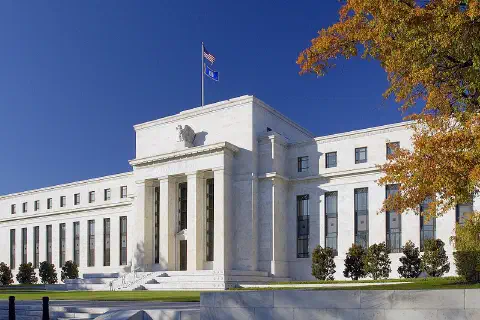
How low will the Fed go?

The Federal Reserve cut rates by 25 basis points on 7 November, taking the federal funds rate to 4.50–4.75 per cent. Bond analysts are now more interested in where the cutting stops. The incoming administration has promised tariffs, tax cuts and bigger deficits, and the likely end-point for rates is creeping up.
From half a point to a quarter
The easing cycle began with a half-point cut on 18 September, the first reduction since the emergency cuts of March 2020. That move ended more than a year at 5.25–5.50 per cent, the peak reached in July 2023 after the fastest run of increases since the early 1980s. The step down to a quarter point in November signalled that officials see less urgency now that the labour market has cooled without cracking. Jerome Powell, the Fed chair, said in Dallas on 14 November that the economy was giving the central bank no reason to hurry.
The inflation data have not made the job easier. Consumer prices rose by 2.6 per cent in the year to October, and core prices, which exclude food and energy, by 3.3 per cent. Progress towards the target has slowed since the summer, with housing costs and services still rising briskly. Futures markets trimmed the odds of a December cut after the Dallas speech, and investors now expect the Fed to move more slowly in the new year.
What the September dots assumed
In September the median official pencilled in a policy rate of 3.4 per cent by the end of next year and a longer-run rate of 2.9 per cent, the committee's best stab at r*. Those projections were drawn up before anyone knew who would win the election. They assumed broadly unchanged fiscal policy and no new trade war. Neither assumption looks safe now.
The longer-run estimate has been drifting up for some time. For years the median sat at 2.5 per cent, a figure shaped by the decade of low inflation and weak investment after 2008. It has crept higher at recent meetings as officials have watched the economy absorb high rates without the downturn many expected. That in itself is evidence that neutral may be higher than they thought. No one can observe r* directly; it can only be inferred from how the economy responds to a given level of rates, and the inference has been pointing upwards.
Where the cuts stop
If fiscal stimulus and protectionism push inflation up again in 2025, the neutral rate of interest (r*) will probably sit well above what officials projected in their September dots. Bond markets have started to price an early end to easing, with the Fed pausing once the policy rate nears four per cent. There is not much room left to cut.
The mechanism runs through two channels. A tariff is a tax on imports that lifts the price level once, but if it arrives while inflation is still above the 2 per cent target, firms and households may treat the jump as the start of something more persistent. Larger deficits add demand directly and raise the supply of Treasuries that investors must absorb. Both push the neutral rate up, so a Fed that kept cutting towards its old estimate of r* would be loosening policy without meaning to.

Long-term yields have already done some of the tightening. The ten-year Treasury yield has risen since the September cut rather than falling, an odd pattern at the start of an easing cycle, as investors ask for more compensation to hold government debt through a period of heavier borrowing. Mortgage rates have followed it upwards, so homebuyers now pay more to borrow than they did before the Fed began cutting. Every rise in long rates does part of the central bank's work for it and weakens the case for further cuts.
The winners and losers from an early stop are easy to identify. Savers keep earning yields above 4 per cent on cash, and money-market funds, whose assets have hit record levels, keep growing. Borrowers with floating-rate debt, such as smaller companies with bank loans and owners of commercial property facing refinancing, get less relief than they were counting on. The housing market stays frozen, because homeowners locked into cheap mortgages from 2020 and 2021 have little reason to sell and buy again at current rates.
Precedents for a short cycle
History offers templates for a shallow easing. In 1995 and early 1996 the Fed under Alan Greenspan cut three times, from 6 to 5.25 per cent, and then stopped as growth held up. In 2019 it made three quarter-point cuts that Mr Powell described as a mid-cycle adjustment before pausing. Both pauses came with the economy still growing, and neither cycle had to contend with a fiscal expansion of the kind now on offer.
The difference this time is the starting point for inflation. In 1995 and 2019 core inflation was at or below target when the Fed paused, which let officials treat the cuts as insurance. Today core inflation remains above target more than two years after the peak, and a new source of upward pressure is on its way. That makes a pause more likely to be long, and a renewed tightening not impossible, if tariffs and deficits push inflation back up.
The case for going lower
The counterargument is that tariffs can slow growth as much as they raise prices. Higher import costs squeeze real incomes, retaliation hurts exporters and uncertainty delays business investment, all of which would argue for more cuts rather than fewer. Campaign pledges also shrink in office: tariffs may be phased in or traded away, and tax cuts must pass a Congress where margins are thin. If the promised policies arrive diluted and late, something close to the September path could still hold.
The signals to watch are the next set of dots in December, the monthly core inflation readings and the details of any tariff orders signed after the inauguration on 20 January. A rise in the median longer-run projection would show officials themselves marking r* higher. A sharp jump in unemployment would do the opposite and reopen the path to deeper cuts.
Tax cuts and tariffs will probably force the Fed to stop earlier than it planned in September. A pause somewhere near four per cent next year now looks more likely than the deeper cuts once pencilled in. Expect the Fed to skip at least one meeting in the first half of next year, and savers to keep earning more than 4 per cent on cash well into the spring.
Write to Arnav Goel at contact@thelombardreview.com
The Sunday Edition, in your inbox
India's economy, markets and money every Sunday, plus our analysis twice a week. Free.
Unsubscribe any time. See our Privacy Notice.