India's rate rise is bigger than it looks
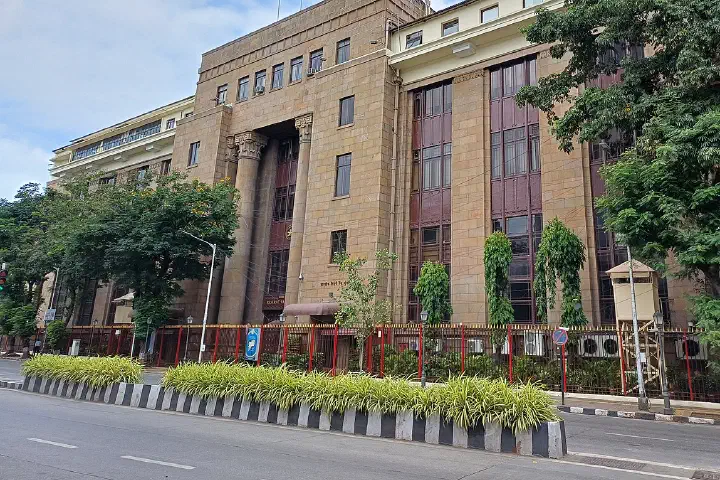
The Reserve Bank of India raised interest rates on Wednesday for the first time since February 2023. Its monetary policy committee voted unanimously to lift the repo rate, the rate at which it lends to banks, by a quarter of a percentage point to 5.50 per cent, and changed its stance from neutral to what it called "calibrated tightening". Rate cuts, the committee said, are now off the table: the next move can only be a rise or a pause.
A quarter-point is the smallest step a central bank usually takes, and markets had largely expected it. In a Reuters poll of 61 economists taken in late September, 35 forecast exactly this. But the headline number understates how much money got dearer this week. The rate that actually governs India's overnight money market may have risen by as much as twice that, because the RBI has spent the past month draining the cash that had been keeping that rate low.
The rate that matters
The repo rate sits in the middle of a corridor. Below it is the standing deposit facility, the rate banks earn on spare cash parked at the RBI; above it is the marginal standing facility, the rate they pay to borrow in an emergency. Before Wednesday the corridor ran from 5.00 to 5.50 per cent. After the rise it runs from 5.25 to 5.75 per cent.
Where the market trades within that corridor depends on how much cash is sloshing around. In August and September there was a great deal. Measures announced in June to attract foreign capital brought money into the banking system, and the RBI's own figures put the average daily surplus at ₹5.9 lakh crore since its August meeting. With so much cash chasing borrowers, the weighted average call rate, the benchmark overnight rate between banks, traded in the lower half of the corridor, between 5.00 and 5.25 per cent. In practice India was running monetary policy closer to the floor than to the repo rate.
That is changing. In September the RBI sold about ₹1 lakh crore of government bonds in the open market, its largest such sale in more than a decade according to Trading Economics, which takes cash out of the banks that buy them. On Wednesday it also offered to absorb ₹3 lakh crore overnight. Banks put in ₹2.56 lakh crore, all of it accepted at 5.49 per cent. Cash that would have earned 5.00 per cent at the bottom of the old corridor now earns almost the full repo rate. Measured from where overnight money actually traded, the tightening is worth between a quarter and half a percentage point, depending on where in the lower half of the corridor the call rate sat.
The governor, Sanjay Malhotra, said so directly. The RBI, he said, will "strive to align the weighted average call rate (WACR) with the policy repo rate". That sentence will matter more to bank treasurers than the size of the rate rise.
Why the committee moved
The committee's case rests on inflation that is no longer confined to fuel and food. Consumer prices rose 4.8 per cent in the year to August, up from 4.5 per cent in July. The RBI now expects inflation of 5.2 per cent for the financial year to March, with the October to December quarter at 6.0 per cent, well above the 4 per cent target. Headline inflation, the statement said, is expected to average almost 5.8 per cent over the next three quarters.
The trigger is a supply shock. The renewed conflict in West Asia has kept crude oil close to $100 a barrel, and a monsoon that ended 13 per cent short of normal is raising food prices, with sugar and onions singled out by the RBI. A higher repo rate can do nothing about either. The committee was candid about this. Monetary policy, its resolution says, acts on supply shocks mainly by curbing "second round effects", the point at which expensive fuel and food feed into firms' pricing and households' expectations.
The gold in the numbers
The evidence that this is happening is real but thinner than the headline suggests. The RBI's measure of core inflation, which excludes food and fuel, rose to 4.2 per cent in August after three months at 3.9 per cent. But the same statement reports that core inflation excluding precious metals was only 2.9 per cent. Gold prices have risen sharply on world markets this year, and because Indian households buy a great deal of it, its price weighs heavily in the index. Strip it out and underlying inflation is comfortably below target.
Gold's price is set in London and New York and swings with the dollar and American bond yields. Indian interest rates have little effect on it. A rate rise justified partly by a core measure inflated by gold risks treating a global asset price as a sign of domestic overheating.
The committee did not rest its case on core inflation alone. The share of items in the consumer price basket rising faster than 4 per cent climbed to about 37 per cent in August, a sign that price rises are spreading. The resolution also points to "strong growth in monetary and credit aggregates". And the RBI's own wording was careful: there is "some evidence" of higher inflation expectations, it said, but "only limited signs" of supply pressures becoming embedded in pricing. That is a case for a modest rise and close watching, which is what the committee delivered.
A split on what comes next
The vote on the rate was unanimous. The vote on the stance was not. Two of the six members, Nagesh Kumar and Ram Singh, wanted to keep it neutral. That matters because the stance is a promise about the future. "Calibrated tightening" rules out cuts; neutral would have left the door open. The minority's view suggests that at least two members see Wednesday's rise as insurance rather than the first step in a long cycle.

Some economists expect more. Radhika Piplani of Motilal Oswal, quoted by Forbes India, expects a further 75 basis points of rises, which would take the repo rate to 6.25 per cent. Nomura and SBI Research had forecast another quarter-point increase in December.
Growth gives the RBI room
The committee can afford to tighten because the economy is strong. GDP grew 7.8 per cent in the April to June quarter, faster than expected, and the RBI raised its growth forecast for the year by 0.4 percentage points, to 7.1 per cent. Exports grew at double-digit rates in July and August. Banks are lending freely.
The rupee is the other pressure. It was trading at about 96.45 to the dollar as the decision was announced, according to Upstox. Foreign portfolio investors have pulled out a net $10.3 billion since April, though direct investment has risen to $13.8 billion over April to August, up from $9.6 billion a year earlier. The RBI says it remains committed to "orderly adjustments" in the exchange rate and to curbing excessive volatility. Higher Indian rates make rupee assets more attractive, but the governor framed the decision around inflation, not the currency.
The bond market took the decision as a signal of more to come. The ten-year government bond yield rose to about 7.26 per cent on Wednesday, a two-year high, according to Trading Economics, having risen 24 basis points in September alone.
What to watch
Three things will show whether this is one rise or the start of several. The first is September's consumer price figures, due next week, which forecasters expect to show inflation moving towards the upper end of the RBI's 2 to 6 per cent tolerance band. The second is core inflation excluding gold. If that stays near 3 per cent, the case for a long tightening cycle is weak. The third is the overnight rate. If the RBI keeps draining cash and the call rate settles at the repo rate, much of the tightening the market fears will already have happened, without another vote.
The minutes of the meeting will be published on October 21, and the committee meets again on December 2 to 4. By then the price of oil may have done more to decide the next move than anything the committee can control.
Write to Arnav Goel at contact@thelombardreview.com