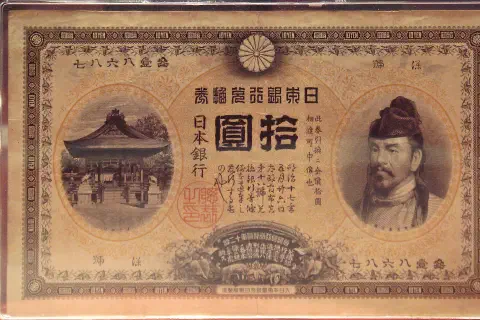
Japan is the last to keep rates below zero

The Bank of Japan is now the last central bank still holding rates below zero. At its final meeting of 2023, Governor Kazuo Ueda kept the benchmark rate at minus 0.1 per cent and gave no clear guidance on when the bank might at last get out. That buys the global yen carry trade a little more time.
Nearly eight years below zero
The negative rate dates from early 2016, when Haruhiko Kuroda's bank added it to a bond-buying programme that had failed to lift inflation, and yield-curve control followed later that year. Mr Ueda, who took over in April, has already loosened the cap on ten-year yields twice, in July and October, so that 1 per cent is now only a loose reference point. Inflation, the reason for the whole apparatus, has been above the 2 per cent target for more than a year and a half. What the bank says it lacks is proof that wages will keep rising fast enough to sustain it.
Japan's company is thin. The European Central Bank brought its deposit rate up to zero in July 2022, and the Swiss National Bank left negative territory that September. Both were responding to inflation that had shot well past their targets. Japan's inflation has been milder and, in the bank's reading, driven more by imported energy and food than by domestic demand, which is why it has been happy to be the last to move.
Burned by early exits
The bank's caution has a history. In August 2000 it ended its first zero-rate policy over the objections of the government, and within months the economy had slipped back into recession and the bank had to reverse course and start buying assets. It tried again in 2006 and 2007, lifting rates to 0.5 per cent, only to be caught by the global financial crisis. Two exits that were followed by retreats have left Japanese officials more afraid of moving too early than too late, the opposite of the lesson the Fed drew from the 1970s.

Borrow in yen, buy abroad
Japan's borrowing costs are negative while other big central banks hold rates above five per cent, so the yen remains the world's favourite funding currency. Investors borrow it for next to nothing and buy higher-yielding government bonds and credit overseas. Ueda's caution keeps this profitable trade alive. It also leaves the yen exposed to a sharp snap-back once domestic wage talks force Tokyo's hand.
The trade pays as long as the yen stays weak or falls further. A fund that borrows yen at close to zero and holds dollar bills paying more than 5 per cent earns the gap every year, and it loses only if the yen rises by more than that. The currency's slide has made the bet look easy: in November the yen sank to around its weakest level against the dollar since 1990. Japan's own savers run a version of the same trade, since the country's insurers and pension funds hold large amounts of foreign bonds, and Japan is the biggest foreign holder of US Treasuries.
The weak yen has a cost at home that limits how long Tokyo will tolerate it. It raises the price of imported fuel and food, squeezing household budgets and eroding the real value of wages. In September and October 2022 the finance ministry sold dollars to prop up the yen for the first time since 1998, and officials have warned repeatedly this year that they stand ready to act again. Intervention buys time, but only a narrower rate gap can change the trend.
How fast a carry trade unwinds
The danger lies in how crowded positions leave. A carry trade earns a small gap slowly and can lose it in days, because when the funding currency starts to rise, everyone who borrowed it buys it back at once. The best-known example came in October 1998, when the collapse of Long-Term Capital Management set off a rush to repay yen loans and the currency jumped against the dollar in one of its sharpest moves on record. A milder preview came earlier this month, when a remark by Mr Ueda to parliament that policy would become more challenging from the year-end sent the yen sharply higher within hours.

Why the unwind may be gentle
There is a good argument that the exit will be orderly. The bank has spent months preparing markets, a first move would probably take the rate only to around zero, and a gap of several percentage points with American rates would survive it. If the Fed cuts next year as futures now imply, the gap would narrow faster from the American side than from the Japanese one. Carry trades are leveraged, however, and leveraged positions rarely wait for the full gap to close before heading for the exit.
The spillovers would reach well beyond currency desks. If Japanese yields rise, domestic insurers and pension funds would have less reason to buy foreign bonds, and some might bring money home. That would push up borrowing costs at the margin in the markets they favour, from American Treasuries to European government debt. Japanese exporters, whose profits have been swollen by the cheap yen, would lose some of that windfall when earnings are translated back into yen.
Wage talks set the timing
The spring wage round, known as shunto, is what the bank is waiting for. Last spring's settlements delivered the biggest pay rises in three decades, and Rengo, the largest union federation, is pressing for rises of 5 per cent or more at next year's talks. The first tallies arrive in March, and the bank meets in January and again in March. A strong result would give Mr Ueda the cover he needs, and a weak one would extend the carry trade's lease.
Every month the Bank of Japan waits, it props up global risk appetite a little longer and adds to the pile of carry trades that must one day unwind. When the exit comes, probably once wage talks give Ueda his cover, the reversal in the yen is likely to be abrupt. March or April is the likeliest window for the first rise, and funds still short the yen by then will be the ones paying for the bank's long patience.
Write to Arnav Goel at contact@thelombardreview.com
The Sunday Edition, in your inbox
India's economy, markets and money every Sunday, plus our analysis twice a week. Free.
Unsubscribe any time. See our Privacy Notice.