Memorial Day: Petrol prices and the summer inflation bump
American petrol prices averaged roughly $3.59 a gallon going into Memorial Day weekend, the unofficial start of the summer driving season, and motorists have no hedge. The seasonal jump in fuel demand puts a predictable kink in the summer inflation figures.
Summer blend, summer prices
Refiners switch to more expensive summer-blend fuel in late spring just as travel picks up, and pump prices rise almost every year as a result. Energy swings can knock headline inflation around, so central bankers will lean on core measures that strip out holiday distortions. Consumers do not. For most Americans the price on the forecourt sign is still the inflation number they notice first.
The summer blend exists because of clean-air rules. Federal regulations require lower-volatility petrol in the warmer months to limit smog, and that fuel costs more to make. Refineries also tend to schedule maintenance in the spring, trimming supply just before demand peaks. The result is a price rise that arrives on the calendar almost regardless of what crude oil is doing.
Crude oil is usually the largest single component of the pump price, with refining margins, distribution costs and taxes making up the rest. The federal tax has been fixed at 18.4 cents a gallon since 1993, so the moving parts are crude and the refiners' cut. American refining capacity has also shrunk since the pandemic, as some plants closed or were converted to make renewable diesel, which leaves less spare capacity to absorb an outage in the peak season. In a tight refining market, pump prices can climb even when crude is flat.
A spring of oil scares
This year crude did its part as well. Brent traded above $90 a barrel in April as the conflict between Iran and Israel threatened to widen, before easing back when it did not. The White House has been anxious enough about the pump price in an election year that the Energy Department announced last week it would sell 1 million barrels of petrol from the Northeast Gasoline Supply Reserve ahead of the Fourth of July. The volume is small beside national consumption, and its main effect is on the headlines.
Last year's pattern will also shape this year's figures. Crude rose sharply in the late summer of 2023, when Saudi Arabia and Russia extended supply cuts and Brent climbed above $90, and pump prices followed. If prices hold near current levels, the year-on-year comparison for energy will look softer from August onwards, flattering the headline rate just as the Fed weighs its first cut. Seasonal adjustment and base effects can thus push the headline figure in opposite directions within a few months.
What statisticians remove
The official monthly figures are seasonally adjusted, so a normal summer rise is largely stripped out of them. The kink appears when the rise comes earlier or runs larger than usual, and in the year-on-year comparison whenever prices differ from last summer's. Households get no such adjustment. They see the unadjusted number every time they fill up, which is why a routine seasonal move can register with them as fresh inflation.
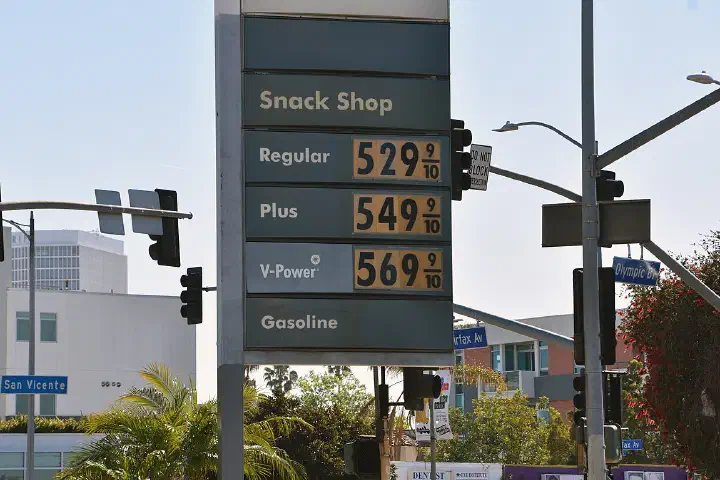
The link from the forecourt to expectations is well documented. Research by Olivier Coibion and Yuriy Gorodnichenko found that households' inflation expectations move closely with petrol prices, far more than those of professional forecasters. The University of Michigan's survey already showed consumers' year-ahead expectations rising in May, and that matters to a Fed that treats anchored expectations as the basis of its credibility.
Who feels it most
The burden falls unevenly. Lower-income households spend a bigger share of their budgets on fuel than richer ones, and rural drivers with long commutes and no public transport cannot cut back. Airlines face higher jet-fuel bills at the start of their busiest season, and discretionary retailers lose the dollars that go into the tank instead of their tills. Refiners are the main beneficiaries, since summer margins tend to widen as demand outruns output.
The shadow of 2022
The political sensitivity comes from recent experience. In June 2022 the national average price of a gallon passed $5 for the first time, and headline inflation peaked that month at 9.1 per cent. The administration responded with the largest release in the history of the Strategic Petroleum Reserve, 180 million barrels over six months. Voters remember the forecourt prices of that summer far better than any core inflation reading, and this year's campaign has kept the memory fresh.
The comparison also shows how much has changed. At today's prices, petrol costs well over a dollar a gallon less than at the 2022 peak, and wages have risen in the meantime, so fuel takes a smaller share of a typical pay packet. The summer bump is an irritation rather than a shock. What keeps it relevant is that inflation elsewhere has not yet fallen far enough to absorb it without notice.
Reacting to the wrong number
The risk runs both ways. In July 2008, with oil near its peak, the European Central Bank raised rates to fight headline inflation, only to reverse course within months as the financial crisis deepened. That episode is the standard argument for looking through energy. The counterweight is the 1970s, when repeated oil shocks fed into expectations and wages and the Fed was slow to respond. The Fed's task this summer sits between the two: ignore the pump price in its models, but watch whether it shifts what households expect.
The indicators are straightforward. OPEC+ meets at the start of June to decide whether to extend its output cuts, and the National Oceanic and Atmospheric Administration has forecast an above-normal Atlantic hurricane season, a standing threat to Gulf Coast refineries. The Michigan survey and the Fed's own projections in June will show whether expectations are drifting.
The summer spike in fuel prices comes round every year, but it still shapes what households expect inflation to be. The Fed will probably have to weigh that at its summer meetings, starting with the one on 11 and 12 June, and it is likely to hold rates while it does.
Write to Arnav Goel at contact@thelombardreview.com
The Sunday Edition, in your inbox
India's economy, markets and money every Sunday, plus our analysis twice a week. Free.
Unsubscribe any time. See our Privacy Notice.