New Year: Everyone expects a recession. That's the warning sign
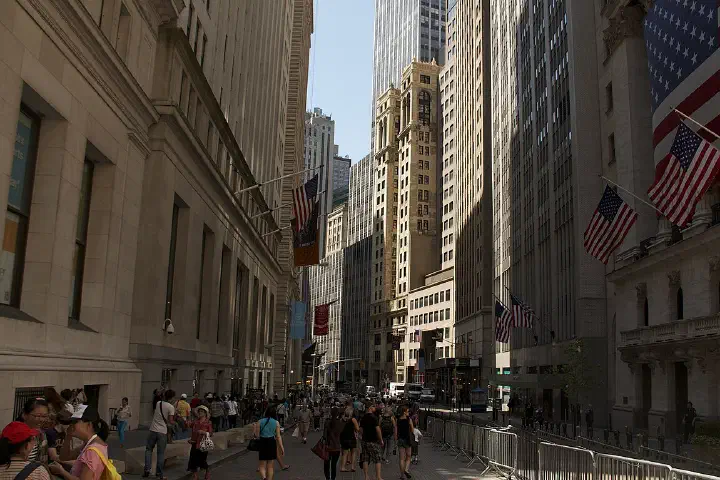
About 65 per cent of economists surveyed at Wall Street banks and independent research firms expect a US recession within the next twelve months, and that degree of agreement should worry any experienced investor as 2023 begins. The story is tidy and widely accepted. Tighter money will break consumer demand, corporate margins will collapse and unemployment will rise. When a whole market positions for one sequence of events, though, the forecast itself becomes a risk that nobody has priced.
Financial history has a lesson about crowded forecasts. The most widely expected recessions rarely arrive on time. When businesses, banks and consumers spend nine months preparing for a downturn, they change how they behave.
Everyone braces early
Managers do not wait for demand to collapse before cutting costs. They trim unnecessary capital spending, freeze speculative hiring and run down inventories well in advance. Retailers such as Target and Walmart spent much of 2022 cutting prices to clear surplus stock, so the inventory overhang that usually deepens a downturn has already been partly worked off.
Banks build loan-loss provisions ahead of time, and households cut back on treats to rebuild their emergency savings. All this caution removes the sudden balance-sheet excesses that usually turn mild slowdowns into full-blown busts, which smooths the path of the economy and pushes back the downturn the consensus expects.
Balance sheets add to the buffer. Most American homeowners hold thirty-year fixed-rate mortgages, and millions refinanced in 2020 and 2021 when rates were at record lows, so the Fed's increases have not touched their monthly payments. Many companies did the same, issuing long-dated bonds at low coupons during the pandemic, which pushes the cost of higher rates years into the future. Tightening therefore works mainly through new borrowing and asset prices instead of through the budgets of existing debtors, and that channel is slower.
Forecasters rarely call it
The record of recession forecasting is poor in both directions. Research at the International Monetary Fund has found that professional forecasters almost never predict recessions a year ahead, and the downturns that began in 2001 and at the end of 2007 arrived while the consensus still expected growth. The reverse error is just as familiar. The Economic Cycle Research Institute publicly called an American recession in the autumn of 2011, and the expansion carried on for more than eight years.
The closest parallel to today is 1994. The Federal Reserve doubled its policy rate from 3 to 6 per cent in a year, bond markets suffered one of their worst routs on record, and many expected the tightening to end in recession. The economy slowed in 1995 and then reaccelerated, and the episode became the textbook example of a soft landing.

What is holding demand up
The case for resilience starts with jobs. Payrolls grew by 263,000 in November and unemployment was 3.7 per cent, close to a half-century low. Employers who struggled to hire in 2021 and 2022 have reason to hoard workers rather than fire them at the first sign of slower sales, and workers who keep their jobs keep spending.
Two external shocks are also fading. European gas prices have fallen far below their August peak, easing the energy squeeze on the continent's industry and households. China has dropped most of its zero-Covid rules and plans to reopen its borders on 8 January, which should lift demand for exports from America's trading partners even if it adds to commodity prices.
Caught short by growth
The bigger danger for institutional portfolios in 2023 is that the recession fails to show up. Cash holdings are high and equity positions have been cut to defensive minimums, so even modest economic resilience could set off a painful short squeeze. Global fund managers surveyed by Bank of America reported this autumn that they were holding more cash than at any time since 2001.
If the labour market holds up and consumer spending refuses to roll over, the Federal Reserve will have to raise rates further than markets expect. Futures currently price a peak below the Fed's own projection of 5.1 per cent and cuts before the end of the year. Resilient growth would force both assumptions to be unwound, which would hurt holders of short-dated Treasuries and long-duration growth shares while helping the cyclical sectors that defensive investors have sold.
The case for the consensus
The strongest objection is that crowded forecasts are sometimes simply right. The yield curve is inverted by more than at any time in four decades, the Institute for Supply Management's manufacturing index fell below 50 in November for the first time since May 2020, and bank lending standards are tightening. A consensus built on those signals rests on indicators with a decent record.
Preparation may therefore change the shape of the downturn more than its occurrence. A recession that businesses have braced for is likely to be shallower, with fewer forced layoffs and fewer bankruptcies, and it may start later than the crowd expects. For portfolios positioned for an early and deep slump, that distinction matters as much as whether the slump happens at all.
What would settle it
The first test is January's payroll report and the weekly figures for jobless claims, which would show layoffs spreading well before GDP data do. Retail sales and the monthly consumer-spending figures will show whether households are cutting back as their pandemic savings run down. The Fed's decision on 1 February will reveal whether it sees enough weakness to stop raising rates.
With nearly every investor braced for recession, the likelier accident in 2023 is growth that holds up, forcing the Fed to push rates higher than markets have priced and catching defensively positioned portfolios on the wrong side.
Write to Arnav Goel at contact@thelombardreview.com
The Sunday Edition, in your inbox
India's economy, markets and money every Sunday, plus our analysis twice a week. Free.
Unsubscribe any time. See our Privacy Notice.