Office loans are going bad
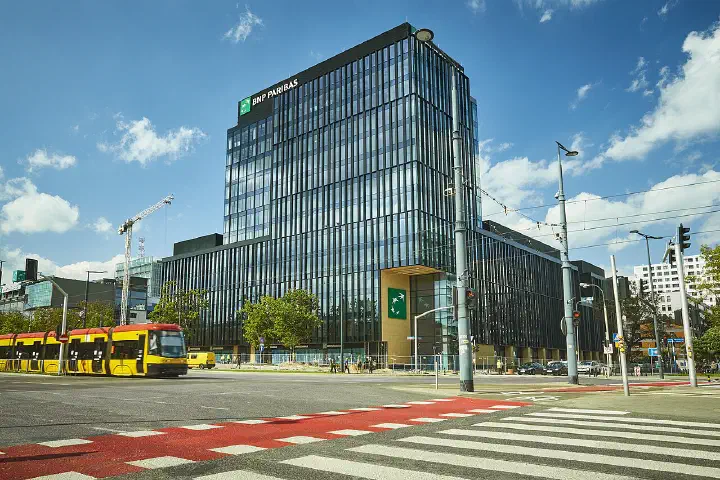
Office loan delinquencies in commercial mortgage-backed securities (CMBS) have risen past 6.3 per cent, according to data from Trepp. Conduit deals carry heavy extension risk, because borrowers will not put fresh equity into city towers now worth less than the loans against them.
The rise has been steady rather than sudden. Office loans were among the best performers in CMBS before the pandemic, and their delinquency rate has climbed month after month as leases expire and tenants shrink their space. Big owners have shown they are willing to walk away: Brookfield defaulted on loans backed by two Los Angeles office towers early last year rather than inject more capital.
How the squeeze builds
Most conduit loans are written for ten years at a fixed rate, often interest-only, with the whole principal due as a balloon payment at maturity. A loan made in 2014 or 2015 was sized against the rents and interest rates of that era. When it comes due today, the borrower needs a new lender, and the new lender looks at lower occupancy, a lower appraisal and a policy rate that the Fed has held at 5.25 to 5.5 per cent since last July. The gap between the old balance and what a new lender will advance has to be filled with fresh equity, and owners of half-empty towers see little reason to supply it.
Keycard data have shown office attendance in big American cities stuck at around half of pre-pandemic levels for much of the past two years. Companies that renew leases usually take less space, so a building's income falls in steps as each tenant's contract ends. Older buildings suffer most, as tenants trade up to newer towers with better amenities.
Extend and pretend
Faced with large refinancing gaps, special servicers are granting more loan modifications and term extensions, a habit the market calls 'extend and pretend'. Delay does not change the property sums. Remote work keeps occupancy low and borrowing costs have doubled, so longer maturities only drag the pain out. Sooner or later the buildings will have to be valued at prices that clear the market.
Regulators have made the practice easier for banks. In June last year the federal banking agencies issued a policy statement on commercial property loan workouts, telling lenders that a sensible modification of a loan to a borrower who can still pay need not be classified as adverse. The guidance aims to prevent forced sales at the bottom of the market, which is reasonable. It also lets lenders postpone recognising losses on buildings whose value may not recover, and the bank and CMBS markets are following the same instinct.
Who takes the loss
Losses in a CMBS trust flow up from the bottom. The first-loss tranche, typically bought by specialist investors, absorbs defaults first, then the mezzanine bonds, and only then the senior AAA classes that insurers and banks favour. Before any loss is booked, appraisal reductions can cut the interest paid to junior bondholders. Extensions also lengthen the life of bonds that investors bought expecting repayment on a set date, which is the extension risk in plain terms.
Special servicers have their own incentives. They earn fees while a loan is in workout, and a modification lets everyone avoid crystallising a loss on the trust's books. That suits borrowers and servicers for now, but it leaves bondholders carrying a property whose value may keep falling while interest accrues.
The damage reaches beyond bondholders. Banks hold far more commercial property debt than CMBS trusts do, and the smaller lenders among them have the heaviest concentrations. New York Community Bancorp's surprise provision last month, and warnings from lenders as far afield as Japan and Germany about American office loans, show the same arithmetic at work on bank balance sheets. City governments are exposed too, since falling office values eventually mean lower property-tax assessments and a thinner base for municipal budgets.
The case for waiting
The best argument for patience comes from the last cycle. After 2008 many troubled commercial loans were extended, rates fell, rents recovered, and plenty of borrowers eventually refinanced at par. Markets also expect the Fed to cut rates this year, which would narrow refinancing gaps, and new office construction has slowed sharply, which should help the best buildings.
That precedent rested on a cyclical drop in demand. This time the fall in office use looks structural, and the rates that made 2010s refinancing easy are unlikely to return soon. Cuts of a percentage point or so would help at the margin without restoring the values against which these loans were written. Trophy towers may recover, but the older stock that dominates many conduit pools faces a lasting loss of tenants.
How the last bust cleared
The early 1990s offer a different model. After the savings-and-loan collapse, the government's Resolution Trust Corporation took over the property of failed lenders and sold it off in bulk at steep discounts, often by pooling loans into securities. The process was painful, but it set prices that buyers could act on, and the market recovered within a few years. Those securitisations also helped create the modern CMBS market. The contrast with today is that no one is forcing sales, so price discovery is slow and the overhang lingers.
The indicators to watch are Trepp's monthly delinquency and special-servicing rates, the share of maturing office loans that pay off on time, and prices on the few office sales that close. Distressed sales at deep discounts set the appraisals for everyone else, and each one brings the reckoning closer.
Extending office loans buys time and does nothing for what the towers are worth. CMBS investors should expect the write-downs to arrive when the extensions run out, probably within a few years, with holders of junior tranches in conduit deals full of older buildings losing most.
Write to Arnav Goel at contact@thelombardreview.com
The Sunday Edition, in your inbox
India's economy, markets and money every Sunday, plus our analysis twice a week. Free.
Unsubscribe any time. See our Privacy Notice.