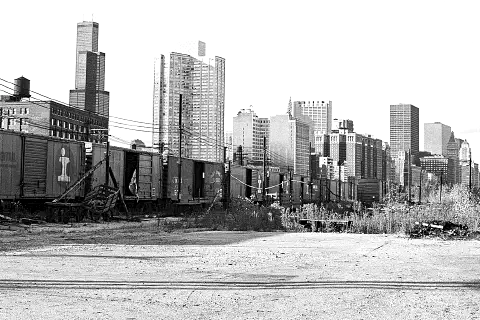
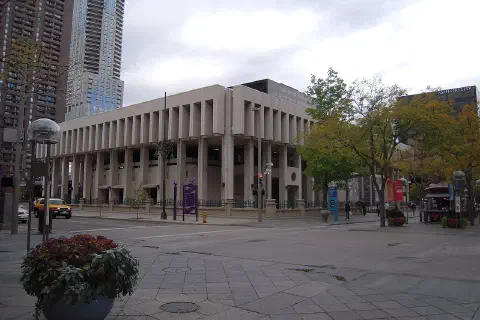
Office towers face a $1.5trn refinancing problem

About $1.5 trillion of commercial real estate debt matures before the end of 2025, according to Morgan Stanley, and office loans are the hardest part of it to refinance. The argument over hybrid working has left the seminar room and reached the balance sheet. Mortgages written in the cheap-money years of 2018–2021, at capitalization rates near 4 per cent and coupons of 3.5 per cent, now have to be rolled over when benchmark borrowing costs are above 7.5 per cent. For many owners of city office towers, the equity is gone.
The arithmetic is simple and harsh. A property's value is its net operating income divided by the prevailing capitalization rate. Office vacancies are climbing towards twenty per cent in the big cities, and net operating income has fallen sharply.
Cheap money built the problem
The loans now coming due were written for a different world. Interest rates were near historic lows, office leases ran for ten years or more, and buyers assumed that city-centre towers would always fill up again. Investors paid high prices for steady rental income, which is another way of saying they accepted low capitalization rates, and lenders were happy to finance most of the purchase.
Two things changed at once. The pandemic taught employers that staff could work from home for part of the week, and many have decided to rent less space as leases expire. Keycard data from Kastle Systems suggest that office occupancy in big American cities is still around half its pre-pandemic level. Then the Federal Reserve raised its policy rate by five percentage points in little more than a year, lifting the cost of every new mortgage.
Where the equity went
Higher interest rates have also pushed market capitalization rates from 4.5 per cent to above 7.5 per cent. An office building worth $100 million in 2019 is now worth roughly $55 to $60 million.
The senior loan on such a building was usually set at 65 to 70 per cent of its value ($65–70 million). The property is now worth less than the mortgage. The owner's equity has been wiped out and the lender is left holding an asset that is underwater.
The interest no longer fits
The income side is just as bad. At a 4.5 per cent capitalization rate, the $100 million building was producing about $4.5 million a year in net operating income, and a loan of $65 to $70 million at 3.5 per cent cost roughly $2.3 million to $2.5 million a year in interest. Refinance the same loan at 7.5 per cent and the interest bill rises to about $4.9 million to $5.3 million, more than the building earns even before any fall in rent.

No lender will write that loan. The new mortgage would have to be much smaller, sized to what the building's income can cover, and the owner would have to make up the difference in cash. That is why the problem shows up at maturity rather than before: a fixed-rate loan at 3.5 per cent can be serviced comfortably until the day it has to be replaced.
Handing back the keys
To refinance, an owner would have to put in tens of millions of dollars of new cash to pay down the old loan, and then pay a higher coupon on the new one. Brookfield, Blackstone and PIMCO are among the institutional managers that have instead done the sensible thing and returned the keys to their lenders.
The cases are already public. Brookfield stopped paying on two Los Angeles office towers in February. Columbia Property Trust, owned by a PIMCO fund, defaulted on loans secured by several office buildings the same month, and a Blackstone fund failed to repay a bond backed by Finnish office properties in March. These strategic defaults land on the balance sheets of regional banks, life insurers and CMBS trusts.
Extend and pretend, again
The strongest counterargument is that lenders rarely force the issue. After 2008, regulators issued guidance in 2009 that let banks restructure and extend commercial property loans without immediately classifying them as bad, and many lenders did exactly that until values recovered. Much of today's office debt is also held by large banks and insurers for which offices are a small share of total assets, and the best new buildings in prime locations are still leasing well.
Extensions do spread the losses out, and they make a sudden crisis less likely. They do not make the losses disappear, because offices face a lasting fall in demand rather than a cyclical dip, and an extended loan on a half-empty building simply defers the reckoning. The early 1990s showed that commercial property losses can take years to work through, and that the lenders most concentrated in the asset suffer most.
Some towers will find new uses, though fewer than hoped. Converting offices into flats is often proposed, but deep floor plates, central lift cores and plumbing designed for a few washrooms per floor make many buildings expensive to convert. For investors with cash, falling prices create openings, and distressed-debt funds and private credit managers have raised money to buy loans and buildings at a discount. The gains will go to those who buy after the write-downs, and the losses to those who lent or bought before them.
The signals to watch are delinquency rates on office loans in commercial mortgage-backed securities, loan-loss provisions at regional banks in their second-quarter results, and the prices at which the few office buildings that do trade change hands. Each sale at a steep discount gives appraisers a new comparison and pushes values lower across the market.
Urban office towers cannot be refinanced when money costs 7 per cent. Over the next few years much of the $1.5 trillion wall will move from over-borrowed owners into the loan-loss reserves of the banks and insurers that lent against it.
Write to Arnav Goel at contact@thelombardreview.com
The Sunday Edition, in your inbox
India's economy, markets and money every Sunday, plus our analysis twice a week. Free.
Unsubscribe any time. See our Privacy Notice.