Politics
Trump's tariffs get a sturdier legal footing
The administration opened broad investigations on 2 June under Section 301 of the Trade Act of 1974, aimed at foreign forced-labour practices and digital services taxes.
The administration opened broad investigations on 2 June under Section 301 of the Trade Act of 1974, aimed at foreign forced-labour practices and digital services taxes.
International mediators published a tentative framework on 28 May for ending the maritime crisis in the Persian Gulf.
Markets rallied in a jumpy, nervous fashion on 26 May on rumours that a comprehensive peace framework between Washington and Tehran, mediated by the Swiss, was close.
Brent crude sat between $105 and $108 over Memorial Day weekend, and the average price of petrol at American pumps topped $4.60 a gallon.
US Customs and Border Protection said on 22 May that it has paid out roughly $35.5 billion in court-ordered tariff refunds to importers.
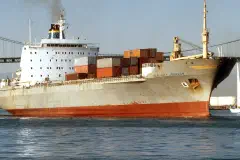
Iran says commercial ships crossing the Strait of Hormuz must now pay a "maritime security passage toll" of up to $2 million a transit, and only in Chinese yuan.
Jerome Powell's term as Fed chairman formally ends in mid-May, and markets have turned their full attention to Kevin Warsh, who takes over.
The chief executive of Saudi Aramco told an energy conference in Riyadh on 11 May that the world is using up its emergency stocks of crude and refined products at a rate it cannot keep up.
The US Court of International Trade (CIT) struck down the administration's temporary 10 per cent tariffs on 7 May, knocking out the White House's fallback trade plan.
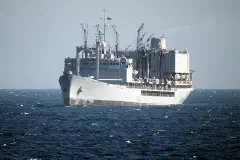
The Pentagon paused its naval convoy escorts through the Persian Gulf on 4 May, an embarrassing halt to its plan to reopen the route to trade.
Wholesale diesel crack spreads have climbed steeply and without pause, and energy analysts and industrial economists think they matter more than the headline Brent price that most commentators watch.
Jerome Powell chaired his last meeting of the Federal Open Market Committee on 28 April, closing an eight-year term that took in a pandemic, the worst inflation in decades and a run of trade wars.
The Treasury switched on the Customs Automated Protest Entity (CAPE) on 20 April.
On Tax Day 2026 millions of American households sent their annual returns to the Internal Revenue Service.
Hopes raised by the Middle East ceasefire were gone by 13 April. The United States Navy did not escort commercial tankers through the Strait of Hormuz.
Airlines are losing money and carmakers have stalled, but refiners are doing very nicely out of the Gulf crisis.
Crude fell by more than eight per cent on 7–8 April after officials from Washington and Tehran, along with regional mediators, announced a tentative and temporary ceasefire framework.
On 6 April the administration rewrote its tariffs on metals. Duties used to be calculated on the value of the steel or aluminium inside an imported product.
China, India, Japan and South Korea take more than eighty per cent of the petroleum that passes through the Strait of Hormuz.
With ships still unable to move through the Strait of Hormuz, Saudi Arabia has turned to its back door.
Brent crude crossed $100 after the Hormuz shock, and the Treasury market split in two.
The Federal Open Market Committee left the federal funds rate at 3.50–3.75 per cent at its March meeting.
The International Energy Agency's coordinated release of 400 million barrels of crude and refined products from strategic reserves was billed as a multilateral effort with no precedent.
Jet fuel prices soared after Hormuz closed, and airlines split into two camps: those that had hedged their fuel and those buying at spot prices.
Washington ran two stories side by side on 10 March. The administration announced plans to raise Section 122 tariffs to the legal maximum of 15 per cent.
Brent crude is trading well above $100 a barrel for the first time since August 2022, and central bank economists are rushing to redo their estimates of how much will feed through into wider inflation.
Brent crude shot above $100 a barrel after war broke out in the Persian Gulf on 28 February.
With the IEEPA tariffs struck down, boardrooms have started fighting over $166 billion in refunds.
On 24 February, days after the Supreme Court's rebuke, the White House invoked Section 122 of the Trade Act of 1974 and imposed an immediate, temporary 10 per cent tariff on all goods imports.
The Supreme Court struck down the administration's across-the-board tariffs by 6–3 on 20 February.
The Lunar New Year holiday emptied mainland China's financial centres, and the People's Bank of China kept the onshore yuan on a tight leash.
Customs duties were bringing in $30 billion a month in early 2026, holding federal revenue at record levels.
More than $130 billion in collected duties depends on the Supreme Court's ruling on the emergency tariffs, and on Valentine's Day trading desks were thinking about that rather than romance.
Enterprise software stocks crashed in early February, and specialist software ETFs fell deep into correction territory.
The US Dollar Index jumped sharply in a single day after Kevin Warsh was formally nominated as Federal Reserve chairman.
Americans settled in to watch Super Bowl LX with something besides football on their minds.
On 30 January the White House nominated Kevin Warsh, a former Federal Reserve governor, to succeed Jerome Powell as Fed chairman.
Microsoft, Alphabet, Meta and Amazon together now expect to spend more than $600 billion on capital projects in 2026, according to guidance given with their fourth-quarter results.
The dollar climbed steadily towards 158 yen, pushing the currency close to the level the Ministry of Finance is widely believed to defend.
A typical presidential tariff threat lasts about seventy-two hours before the retreat or the exemptions arrive.
On 20 January the White House threatened European countries with immediate 25 per cent tariffs on all their goods exports unless Denmark and its European allies formally open talks on handing sovereignty over Greenland to the United States.
JPMorgan Chase, Goldman Sachs, Morgan Stanley and Citigroup reported fourth-quarter results with a familiar split.
Yields on 30-year Japanese government bonds hit a record high as Tokyo's bond market sold off again.
The unemployment rate rose to 4.6 per cent in November, and the jobs report left economists' models in a muddle.
Customs duties raised $195 billion in gross collections in fiscal year 2025, according to Treasury Department receipts.
More than $130 billion of emergency IEEPA customs duties hang on the Supreme Court's tariff ruling, and company accountants and the Big Four audit firms are busy drafting contingency disclosures.
Executives and fund managers back at their desks for 2026 find their forecasts hanging on one outside event.