Special Report
New Year's Eve: How the dollar lost its shine
The Dollar Index ended the year down 9 per cent, the greenback's worst twelve months since the aftermath of the global financial crisis.
The Dollar Index ended the year down 9 per cent, the greenback's worst twelve months since the aftermath of the global financial crisis.
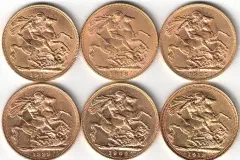
The US Dollar Index finished 2025 down about 9 per cent, and spot gold rose more than 65 per cent, a historic gain.
Shops opened for the Boxing Day sales at the end of a holiday season run almost entirely without official data.
Headline inflation eased to 2.7 per cent year-on-year in November, the Bureau of Labor Statistics reported.
Wall Street got an early present this holiday season: a delayed government report showing third-quarter gross domestic product growing at 4.3 per cent.
The US economy grew at an annualised 4.3 per cent in the third quarter, according to gross domestic product figures from the Bureau of Economic Analysis.
Paramount Global made a hostile all-cash bid of $30 a share for Warner Bros Discovery on 19 December, an open attempt to wreck the all-stock merger Netflix had already agreed.
Money-market swaps put a 90 per cent chance on a 25-basis-point rise at the Bank of Japan's 19 December meeting, and currency desks are getting ready.
The Federal Open Market Committee cut the federal funds target by 25 basis points to 3.50–3.75 per cent at its last meeting of 2025, and formally started $40 billion a month of Reserve Management Purchases.
Eight days after quantitative tightening officially ended on 1 December, the Federal Reserve said it would buy $40 billion of Treasury bills a month under a permanent programme of 'Reserve Management Purchases' (RMPs).
Benchmark 10-year Japanese government bond yields jumped to 1.8 per cent, a level last seen seventeen years ago.
Americans spent more than $13 billion online on Cyber Monday, a record according to Adobe Analytics.
A single speech by John Williams, president of the New York Fed, reset market expectations for Federal Reserve policy on 21 November.
Thanksgiving tables offered a live test of how fast prices respond when a tariff is removed.
On 14 November the White House abruptly exempted imported beef and raw coffee beans from all border tariffs.
Nvidia reported $57 billion of revenue for the third quarter of fiscal 2026, another huge number and comfortably ahead of Wall Street's consensus forecast.
The primary corporate bond market is struggling to digest a flood of debt from the companies spending most on artificial intelligence, and institutional credit portfolios are full.
The longest federal government shutdown in modern American history has ended after forty-three days.
The Supreme Court heard oral arguments on 5 November in the landmark challenge to the administration's use of the International Emergency Economic Powers Act (IEEPA) to impose across-the-board tariffs.
China's annual Singles' Day shopping festival ended on an unusually subdued note, a sign of malaise in the world's second-largest consumer economy.
Meta Platforms has sold $30 billion of investment-grade bonds in several tranches, a deal of a size rarely seen, to pay for its artificial intelligence spending plans.
On 4 November Washington and Beijing surprised markets once again with a broad trade de-escalation, rolling back punitive tariffs and suspending retaliatory export controls.
At its October meeting the Federal Open Market Committee cut interest rates by 25 basis points, as expected, taking the federal funds target to 3.75–4.00 per cent.
Nvidia's market capitalization passed $5 trillion on 29 October, making it the world's most valuable company.
The federal government shutdown, now several weeks old, has halted most of the statistical agencies.
Look closely at the venture deals financing the artificial intelligence boom and a circular pattern appears, one that recalls the worst speculative habits of the dot-com era.
In mid-October the Secured Overnight Financing Rate (SOFR) kept printing above the Interest on Reserve Balances (IORB) rate.
The Indian rupee fell to a record low of 88.8 to the US dollar as millions celebrated Diwali.
Zions Bancorporation surprised investors on its third-quarter earnings call with a $50 million charge-off on two commercial real estate loans.
On 9 October, ahead of a scheduled bilateral summit, Beijing imposed sweeping export restrictions, effective immediately, on specialised heavy rare earth refining equipment, sintered neodymium magnets and advanced metallurgy software.
First Brands, a big car-parts maker, filed for Chapter 11 bankruptcy, and Tricolor, a subprime auto lender, had already collapsed into a Chapter 7 liquidation weeks earlier.
The yen sold off after Japan elected new political leadership, sending USD/JPY back towards 150, a level traders watch closely.
The first Friday of October came and went without an Employment Situation report from the Bureau of Labor Statistics, one of the rare gaps of its kind in modern monetary history.
Congress is heading for a 1 October funding deadline with no compromise in sight, and the Federal Reserve is bracing for the consequences.
Spot gold broke through $3,700 an ounce and was trading near $3,750, one of the fastest bullion rallies in modern financial history.
The Federal Open Market Committee cut the federal funds target by 25 basis points to a range of 4.00 to 4.25 per cent, the first move in a new easing cycle.
The Senate confirmed Stephen Miran to a vacant seat on the Federal Reserve Board of Governors on 15 September.
Oracle's remaining performance obligations (RPO), the measure of contracted but unbilled customer backlog that software analysts trust most, rose by 36 per cent year-on-year to a record $455 billion.
The Bureau of Labor Statistics said in its preliminary annual benchmark revision that payrolls in the twelve months to March 2025 had been overstated by 911,000 jobs.
This column was launched in September 2022, and three full years on it has checked its main macroeconomic calls against what actually happened.
The US economy added just 22,000 non-farm jobs in August, and the unemployment rate rose to 4.3 per cent.
The American labour market reached Labor Day in an uncomfortable state, with hiring largely frozen but few large layoffs.
Nvidia reported revenue of $46.7 billion for the second quarter of fiscal 2026, another very strong result.
On 25 August President Donald Trump moved to remove Lisa Cook, a Federal Reserve governor, before her term expires, and she has said she will fight the dismissal.
Jerome Powell used his annual speech at the Jackson Hole Economic Symposium to signal that the Federal Reserve is preparing to cut interest rates.
A 39 per cent tariff on Swiss exports to the United States took effect on 7 August, and it caught Switzerland off guard.