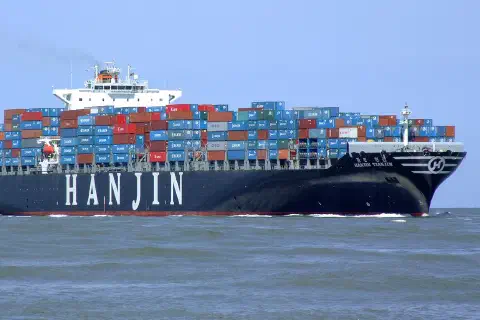
Shipping costs double as ships avoid the Red Sea

Spot container freight rates between Asia and Europe have more than doubled in three weeks as ships avoid the Suez Canal and take the 3,500-mile detour around Africa. The Red Sea crisis was first dismissed as a passing logistical headache. It is turning into a lasting source of friction in world trade.
How the detours began
The attacks began after the war between Israel and Hamas broke out in October. Houthi rebels in Yemen, who say they are acting in support of Palestinians, seized the car carrier Galaxy Leader in November and then fired drones and missiles at merchant ships passing through the Bab el-Mandeb strait. In mid-December the largest container lines, including Maersk, MSC, Hapag-Lloyd and CMA CGM, suspended transits, and the oil company BP paused tanker voyages through the area.
America launched a multinational naval operation to protect shipping, and Maersk briefly said it would return. It paused again at the end of December after one of its ships was attacked and American helicopters sank Houthi boats that tried to board it. Most container traffic between Asia and Europe now sails around the Cape of Good Hope, adding roughly ten days to each voyage.
Longer voyages, fuller warehouses
Higher freight bills are only part of the cost. The bigger one falls on working capital. Longer voyages tie up container capacity and delay deliveries of components to European manufacturers, who then have to rebuild buffer stocks. Global goods prices had only just started falling in earnest, and now the rerouting of sea trade is pushing supply-side costs back into retailers' accounts.

The capacity arithmetic explains why rates jumped so fast. A weekly service between Shanghai and Rotterdam needs a fixed number of ships to keep its schedule; if each round trip takes several weeks longer, lines must add ships to the loop or accept gaps in the timetable. Every ship redeployed to the longer route is withdrawn from somewhere else, so the squeeze spreads to other trades. Fuel bills rise with distance, and war-risk insurance premiums for ships that still use the Red Sea have climbed sharply.
Timing adds to the pressure. Exporters in China rush to ship goods before factories close for the lunar new year, which falls on 10 February, and the delays will push that rush into a tighter window. Retailers ordering spring stock now face both higher prices and less certain delivery dates.
The Red Sea is not the only chokepoint under strain. A drought has lowered water levels in the Panama Canal since last summer, and its authority has cut the number of ships allowed through each day, forcing some traffic between Asia and America's east coast onto longer routes as well. With two of the world's main canals restricted at once, the slack that shipping lines would normally use to absorb one disruption has largely gone.
A precedent from the 1960s
The canal has been lost to shipping before. After the Six-Day War in 1967 it stayed closed until 1975, and trade between Europe and Asia went round Africa for eight years. Shipping adapted by building much larger tankers, since the longer route rewarded economies of scale, and many of the new supertankers were too big to pass through the canal fully laden once it reopened. The closure in 2021, when the Ever Given ran aground and blocked the canal for six days, was far shorter but showed how quickly delays ripple through supply chains.
Winners and losers
Container lines are the clearest winners. They entered the winter facing falling rates and a glut of new ships ordered during the pandemic boom; the detours have absorbed that surplus and lifted their share prices. Egypt is a heavy loser, since Suez Canal fees are one of its main sources of foreign currency at a time when its economy is already under strain. European manufacturers that rely on Asian components, and retailers selling imported goods on thin margins, face higher costs and delays. Air cargo carriers may pick up some urgent consignments, since flying is the only quick alternative for high-value components.

The effect on energy is more muted so far. Oil and gas tankers can also take the Cape route, and oil prices have not risen much, because supply elsewhere is ample. A wider regional war that affected the Strait of Hormuz would change that quickly.
The case against a price shock
The strongest counterargument is that freight is a small share of the final price of most goods. A doubling of spot rates adds only a modest amount to the cost of a pair of trainers or a television shipped in a container that holds thousands of them. Many large shippers move goods under annual contracts rather than at spot rates, which delays the pass-through. Rates today also remain well below the peaks of 2021, when strong demand, port congestion and closed factories all pushed in the same direction.
Demand is also weaker now. European consumers are cautious, inventories built up during 2022 have been run down only recently, and the container fleet is growing fast. If the detours last only weeks, the spike in freight rates will fade and the effect on consumer prices may be barely visible in the statistics. The argument of this column depends on the disruption lasting months, not weeks.
What to watch
The first signal is whether the naval operation restores safe passage; as long as the big lines keep avoiding the strait, rates will stay high. Weekly spot freight indices, delivery times reported in purchasing managers' surveys and the prices manufacturers pay for inputs will show whether costs are feeding through. Euro-area inflation rose to 2.9 per cent in December, largely because of energy base effects, and the European Central Bank will be watching goods prices closely in the coming months.
Freight rates doubled within weeks of the attacks. If the detours last into the spring, European goods prices will probably turn back up and the disinflation that central banks have been counting on will stall. The European Central Bank, which markets expect to begin cutting rates within months, is the institution most likely to be forced to wait longer as a result.
Write to Arnav Goel at contact@thelombardreview.com
The Sunday Edition, in your inbox
India's economy, markets and money every Sunday, plus our analysis twice a week. Free.
Unsubscribe any time. See our Privacy Notice.