Super Bowl: Shoppers wait for the tariff verdict

Americans settled in to watch Super Bowl LX with something besides football on their minds. Shoppers and the companies advertising to them were both waiting for the Supreme Court to rule on the emergency border tariffs. The justices heard the challenge in November, and several of them sounded sceptical that a law written for national emergencies lets a president set tariffs on almost every trading partner.
How the case got here
The law in question, the International Emergency Economic Powers Act of 1977, had been used for decades to freeze assets and block transactions with hostile governments, but no president had used it to set tariffs before 2025. The administration leaned on it for the fentanyl-related duties on Canada, Mexico and China and then for the reciprocal tariffs announced in April. Importers sued, and they won twice: at the Court of International Trade in May and at the Federal Circuit in August. The Supreme Court took the consolidated cases on an expedited schedule, which is why a ruling could come at any time.
A $30 billion monthly bill
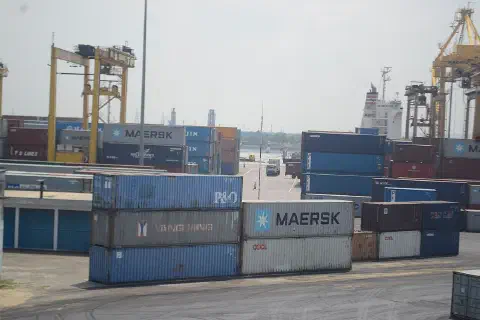
Customs collections are running at $30 billion a month, and the cost reaches almost everything consumers buy, from big-screen televisions to snacks for the game-day party. Shoppers are paying the import levies in full. Retail sales around the Super Bowl pointed to caution, with households cutting back on anything they could do without. The duty is paid by the importer of record when goods clear the border, and the bill then travels down the chain through wholesalers and retailers until it reaches the checkout.
The evidence on who pays is not new. Studies of the tariffs imposed on Chinese goods and on washing machines in 2018 and 2019, including work by economists at the Federal Reserve Bank of New York, found that American importers and their customers bore nearly all of the cost, with foreign exporters cutting their prices very little. Those tariffs covered a fraction of imports. The emergency duties cover almost all of them, which leaves shoppers with fewer untaxed alternatives to switch to.
Who feels it most
The burden is uneven. Poorer households spend a larger share of their income on goods, much of it imported, while richer ones spend more on services that tariffs do not touch. Retailers with thin margins, such as discount chains and grocers, have little room to absorb the cost, whereas brands with loyal customers can pass it on and sometimes widen their margins in the process. Small importers are squeezed hardest of all, since they lack the buying power to push the levy back onto foreign suppliers.
Timing adds to the unevenness. Many retailers front-loaded imports early in 2025, before the reciprocal rates took effect, and sold that inventory at old prices for months. As those stocks ran down, the duty-inclusive cost of replacement goods reached the shelves in stages, which is why price rises on some categories kept arriving long after the tariffs were announced.
Ads that talk about price
Advertisers paying millions for commercial slots showed the same nerves. Their campaigns leaned on value, financing offers and practical use, and steered clear of luxury and aspiration. The Super Bowl is the one night of the year when American brands buy attention at any price, so a shift in tone there is a fair guide to what marketing departments think consumers will respond to over the following months.
Televisions show how the rules shaped supply chains. Mexico is the largest source of the sets Americans buy, and goods that qualify under the trade agreement with Mexico and Canada were exempted from the emergency duties imposed on those two countries. Brands that could document enough North American content paid little or nothing, while those shipping finished sets from Asia paid the full rate, so the same screen could carry very different tariff costs depending on where it was assembled.

What a ruling would change
A decision against the administration would strike down the tariffs imposed under the International Emergency Economic Powers Act, including the broad reciprocal duties, but it would leave others standing. The duties on steel, aluminium, cars and several other goods rest on Section 232 of the Trade Expansion Act, which lets the president act on national-security grounds and is not before the court. The administration could also turn to Section 122 of the Trade Act of 1974, which allows a tariff of up to 15 per cent for 150 days to deal with a balance-of-payments problem, or to Section 301 investigations of unfair trade practices, which take longer to run.
Refunds are the other complication. Money collected under a statute later found not to authorise it would in principle be owed back, and several large importers have already filed claims at the Court of International Trade to protect their right to repayment. Those refunds would go to the companies that paid the duties, not to the shoppers who bore the cost, and retailers rarely cut shelf prices as quickly as they raise them.
That asymmetry is well documented in petrol, where pump prices climb quickly after crude rises and drift down slowly after it falls. Retail pricing works the same way, for a practical reason: a shop that has reset thousands of price labels once is in no hurry to do it again while the legal outlook is unsettled. Shoppers should not expect the benefit of a ruling against the tariffs to show up in the aisles within weeks.
The case for patience
The counterargument is that a ruling may change less than shoppers hope. If the court upholds the tariffs, the current prices stay; if it strikes them down, officials have already pointed to other legal routes, and companies may hold prices until they see which ones survive. Section 122 has never been used, and any replacement tariff built on it would expire after 150 days unless Congress extended it, so a ruling against the government would at least put a clock on the rates that replaced the emergency duties.
The signals to watch are the date of the decision, whether the court addresses refunds, the monthly customs receipts published by the Treasury, and retail sales figures for the spring. Super Bowl 2026 found shoppers and advertisers alike on hold. Until the court rules, consumers are likely to keep spending carefully, and the verdict will decide whether prices on the shelves come down.
Write to Arnav Goel at contact@thelombardreview.com
The Sunday Edition, in your inbox
India's economy, markets and money every Sunday, plus our analysis twice a week. Free.
Unsubscribe any time. See our Privacy Notice.