The Fed cuts, then takes back half of next year's cuts
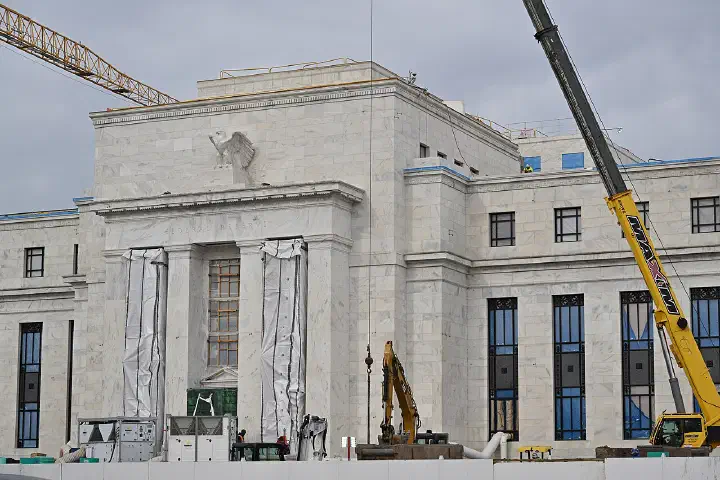
The Federal Reserve ended 2024 by cutting rates 25 basis points, to 4.25–4.50 per cent, as expected. The surprise was in the dot plot, which halved the number of cuts pencilled in for 2025 from four to two.
The decision completed a full percentage point of easing since September, when the Fed opened with a half-point cut. It was not unanimous: Beth Hammack, president of the Cleveland Fed, dissented in favour of holding rates. The projections also raised the median estimate of the long-run neutral rate to 3 per cent and lifted the forecast for core inflation next year to 2.5 per cent, well above the target the Fed had expected to be approaching by now.
Tariffs enter the forecasts
The FOMC changed its central forecasts to allow for faster growth and sticky core inflation, as well as the tariffs the incoming administration has promised. By signalling that easing will stop well above four per cent, Jerome Powell put an end to talk of a long cutting cycle. Treasuries sold off, with long yields rising most, as traders priced out cuts.
Mr Powell was candid about the tariff question. He said at his press conference that some officials had begun to build possible effects of trade policy into their forecasts, while others had not, and that the committee could not know the details until the policies were announced. That is an unusual admission. Central banks normally forecast on the basis of policies already in place, and the Fed has chosen to lean against inflation that has not yet happened, from policies that have not yet been enacted.
How the market took it
The reaction was sharp. The Dow Jones Industrial Average fell by more than 1,000 points on the day of the decision, extending a run of losses to ten sessions, its longest since the 1970s. The ten-year Treasury yield rose to its highest since the spring. The dollar strengthened against most currencies. Investors who had expected the easing cycle to deliver a steady supply of cheaper money had to reprice quickly.
The biggest adjustment was in expectations for next year. Futures markets had already been trimming bets on cuts, and after the meeting they priced little more than one or two for the whole of 2025. That leaves the policy rate likely to end next year not far below 4 per cent, compared with the much lower levels many forecasters had assumed only a few months ago.
Why the Fed turned cautious
The reasons go beyond tariffs. Core inflation stopped falling in the autumn, with monthly readings running at 0.3 per cent for four months in a row. The economy has kept growing at a solid pace, and unemployment has stabilised rather than rising further. A higher estimate of the neutral rate means that today's policy is less restrictive than officials once thought, so there is less need to keep easing. Fiscal policy adds to the case for caution: the incoming administration wants to extend tax cuts, and Congress narrowly avoided a government shutdown last week after a fight that exposed how little appetite there is for spending restraint.
Who pays for fewer cuts
Borrowers bear most of the cost. Mortgage rates track long-term Treasury yields, which have risen since the Fed began cutting, so home buyers have seen little benefit from a full point of easing. Companies that borrow on floating rates will get some relief, but much less than they expected. Governments with heavy debts, including America's own, face higher interest bills for longer. Savers and holders of money-market funds are the beneficiaries, since short-term yields will fall more slowly than they feared.
Outside America, a stronger dollar tightens conditions for emerging markets that borrow in dollars and for central banks that were hoping to cut rates without weakening their currencies. The Fed's caution tends to export itself.
The case against the pivot
The Fed's critics say it is reacting to noise. Shelter inflation, the largest part of core, is still slowing. Tariffs may prove smaller or slower to arrive than promised, and even if imposed they tend to raise the price level once rather than create lasting inflation. The labour market, though stable, is cooler than it was, and a Fed that stops cutting too early could let it weaken further. On this view, two cuts is an overcorrection that will have to be reversed.
That view may prove right, but the Fed's choice is defensible. After years of inflation above target, it has reason to fear that a one-off rise in prices could feed into expectations and wages, and pausing costs less than having to reverse course.
What to watch
The next meeting at the end of January is widely expected to bring a pause. After the inauguration on 20 January, the scale and timing of tariffs will become clearer, and the Fed will respond to announcements rather than campaign promises. January's inflation data, which often include price rises companies push through at the start of the year, will be the first test of whether the Fed's caution was warranted.
The Fed has started to guard against tariff and fiscal inflation before it shows up in the data. Borrowers hoping for cheaper money in 2025 will probably get two cuts at most, and perhaps fewer. Expect a pause through at least the spring, with mortgage rates staying near 7 per cent and home buyers, not the Fed, bearing the cost of its new caution.
Write to Arnav Goel at contact@thelombardreview.com
The Sunday Edition, in your inbox
India's economy, markets and money every Sunday, plus our analysis twice a week. Free.
Unsubscribe any time. See our Privacy Notice.