The Treasury starts buying back its own debt
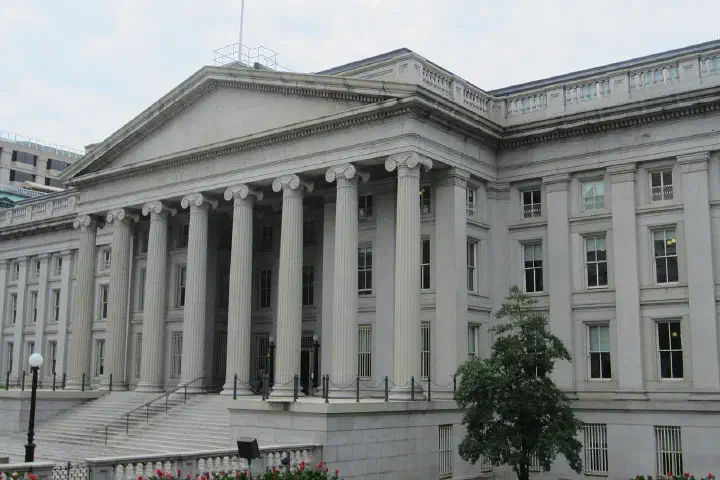
The US Treasury has begun its first regular debt buyback programme since the early 2000s. It will buy older, off-the-run securities from primary dealers and pay for them by issuing more of the liquid, on-the-run benchmark bonds that investors prefer.
The programme has been a long time coming. The Treasury first consulted dealers and investors about buybacks in 2022, and in 2023 it said it expected to start them in 2024 once the operational details were settled. That caution reflects the market's importance: Treasuries are the collateral behind much of the world's secured lending and the benchmark against which almost every other dollar asset is priced.
Two kinds of buyback
The details came with the quarterly refunding announcement on 1 May. Liquidity-support buybacks, capped at $30 billion a quarter, will target older coupon securities across the curve. Cash-management buybacks, capped at $150 billion a year, will be timed for months of heavy tax receipts, when the Treasury is flush and would otherwise slash bill issuance and then rebuild it weeks later. The operations run as reverse auctions: dealers offer bonds, and the Treasury accepts the offers it judges cheapest.
Oiling the secondary market
The programme is meant to improve trading conditions in the secondary market, and it leaves the net supply of federal debt unchanged. Off-the-run Treasuries clog up dealer balance sheets, and their bid-ask spreads widen when markets are under stress. By standing ready to buy the less liquid issues, the Treasury is acting as a market-maker of last resort for its own debt.
The balance-sheet problem is a legacy of 2008. Leverage rules introduced after the crisis require banks to hold capital against Treasuries as well as riskier assets, so a dealer warehousing unwanted old bonds ties up capital it could use elsewhere. As the stock of debt has grown, the market has outgrown the capacity of the dealers who make it. The buybacks give those dealers a regular, predictable buyer for the bonds that are hardest to shift.
The operations are organized by maturity. The Treasury publishes a schedule in advance showing which segments of the curve it will target and when, so dealers know that bonds in a given bucket will have a buyer on a given day. Because the purchases are funded by issuing more of the current benchmarks, the total stock of debt does not change; what changes is its shape, with fewer stranded old issues and larger, more liquid new ones. The cash-management operations should also smooth the swings in bill supply around tax dates, which money-market funds will welcome.

Lessons from March 2020
The case for acting rests on one bad week. In March 2020, as foreign central banks, hedge funds and money funds all raised cash at once, the market for the world's safest asset seized up, and off-the-run bonds were the hardest to sell. The Federal Reserve ended up buying Treasuries by the hundreds of billions of dollars within weeks and temporarily exempted them from the leverage ratio. Nobody wants to repeat that rescue, and buybacks are one of several fixes, alongside Securities and Exchange Commission rules adopted in December 2023 that will push more cash and repo trading through central clearing over the next few years.
The last buybacks, between 2000 and 2002, had a different motive. The government was running budget surpluses and used them to retire debt early. This time the money comes from selling new bonds, which is why the programme changes the composition of the debt without shrinking it.
That week was not the only warning. On 15 October 2014 the ten-year yield swung by more than a third of a percentage point within minutes, with no obvious news to explain it, in what became known as the flash rally. Official reviews pointed to a market increasingly dominated by high-speed trading firms and thinner dealer inventories. Each episode reinforced the same diagnosis: liquidity in Treasuries is abundant in normal times and can vanish abruptly when everyone wants the same side of the trade.
Who gains
Primary dealers gain most directly, since they can offload inventory at auction rather than sit on it. Holders of old, illiquid issues gain a little, because a standing buyer narrows the discount at which those bonds trade. The Treasury itself may save a small amount over time if investors pay up for the liquidity of its benchmarks, lowering the yield it pays on new issuance.
Where it could fall short
The scale is modest. $30 billion a quarter is small beside a federal debt that passed $34 trillion at the start of this year, and in a genuine panic the dealers' problem is too many bonds arriving at once, which a quarterly cap cannot absorb. Sceptics also note that a buyer of last resort can encourage the risk-taking it is meant to cushion, if leveraged funds come to assume the Treasury will always take their bonds. Those objections limit what the programme can do in a crisis, though they do not argue against smoothing the strains of an ordinary bad week. The test will come in the auction results, in whether dealers offer far more than the Treasury accepts, and in the gap between off-the-run and benchmark yields the next time markets wobble.
A day of plumbing repairs
The timing was not accidental. The buyback details arrived on the same day the Federal Reserve announced it would slow the runoff of its Treasury holdings from June, cutting the monthly cap from $60 billion to $25 billion. Both steps aim at the same weak point, the capacity of private balance sheets to absorb a rising volume of government debt. The Treasury also repeated at its refunding that it did not expect to increase coupon auction sizes for at least the next several quarters, which leaves bills to absorb any surprise in the deficit.
The buybacks should make Treasuries easier to trade when markets are strained, and dealers will be glad of the balance-sheet room. They do nothing about the deficit, which will keep adding to the pile of debt the Treasury has to sell, and the next bout of stress will show within a single volatile week whether $30 billion a quarter is enough.
Write to Arnav Goel at contact@thelombardreview.com
The Sunday Edition, in your inbox
India's economy, markets and money every Sunday, plus our analysis twice a week. Free.
Unsubscribe any time. See our Privacy Notice.