Trump moves to fire a Fed governor
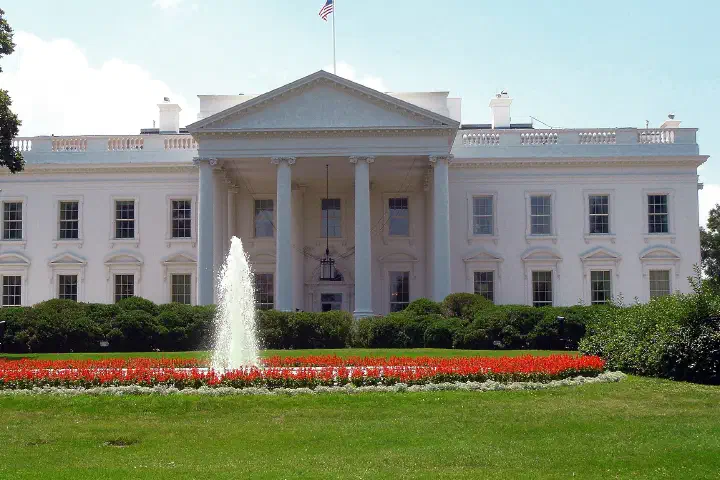
On 25 August President Donald Trump moved to remove Lisa Cook, a Federal Reserve governor, before her term expires, and she has said she will fight the dismissal. No president had tried before to fire a sitting governor, and the move reads as a bid to tilt the board towards the lower rates the White House wants. Sovereign debt markets were rattled at once.
The stated grounds are allegations, made by the director of the Federal Housing Finance Agency, Bill Pulte, that Cook claimed two properties as primary residences on mortgages taken out in 2021, before she joined the board. She has not been charged with any offence. The allegations concern her private finances before she took office rather than her conduct at the Fed, so the legal fight will turn on what the law's protection actually covers.
A campaign months in the making
The dismissal did not come out of nowhere. For most of the year the president has attacked Jerome Powell for holding rates at 4.25 to 4.5 per cent, mused about firing him, and seized on cost overruns in the renovation of the Fed's headquarters as a possible pretext. Pulte referred the mortgage allegations to the Justice Department, and within days the president demanded Cook's resignation. When she declined, he announced her removal in a letter posted on social media.
Cook was appointed by Joe Biden in 2022 and reconfirmed in 2023 for a full fourteen-year term. Those long terms exist precisely so that governors outlast the presidents who appoint them, and so that no single administration can remake the board in one go. Removing a governor mid-term by executive letter short-circuits that design, which is why her lawyer, Abbe Lowell, has signalled a lawsuit rather than a negotiated exit.
What "for cause" means
The Federal Reserve Act lets the president remove a governor only "for cause". That has traditionally meant clear wrongdoing or serious incapacity, not holding different views on the economy. Challenging the protection goes to the heart of the central bank's independence. If a president can fire governors who vote against the rates the White House wants, monetary policy starts to follow the electoral calendar.
The legal ground has been shifting. In Humphrey's Executor in 1935 the Supreme Court upheld removal protections for independent regulators, but in May it let the president dismiss members of the National Labor Relations Board and the Merit Systems Protection Board while signalling that the Fed, with its distinct history, stands apart. Cook's case tests whether that carve-out holds when the White House alleges misconduct instead of citing policy. A court may well ask whether unproven claims about events before her appointment meet the statutory test at all.
Four seats of seven
The stakes lie in the board's arithmetic. Waller and Bowman were appointed by Trump in his first term, and Stephen Miran has been nominated to the seat vacated by Adriana Kugler. With Miran confirmed and Cook replaced, the president's picks would hold at least four of the seven seats. That majority would vote on the reappointment of the regional Fed presidents, whose five-year terms come up early next year, and so gain leverage over the committee that sets interest rates.

That lever matters more than any single vote on rates. The rate-setting committee has twelve voting members: the seven governors plus the president of the New York Fed and four regional presidents on rotation. A board that could refuse to reappoint regional presidents would shape the whole committee as well as its Washington contingent. Powell's term as chairman also expires in May next year, so the White House will soon name a successor as well.
Long bonds sell off
Bond investors did not cheer the prospect of lower policy rates. They sold the long end of the Treasury curve hard, and thirty-year yields jumped as they priced in the risk of debasement and weaker institutions.
The channel is the term premium, the extra yield investors demand for holding long bonds instead of rolling over short bills. A politically pliant Fed would cut short rates faster, pulling two-year yields down, but it would also raise the odds of higher inflation over the life of a thirty-year bond. The result is a steeper curve: cheaper short-term money for banks and floating-rate borrowers, dearer long-term money for mortgage borrowers and for a Treasury that must finance a large deficit. Gold, which pays no coupon and cannot be printed, is the natural beneficiary.
The dollar sits awkwardly in this picture. Foreign central banks and pension funds hold Treasuries partly because they trust the institutions behind them, including a central bank that answers to its mandate rather than to the president. Any erosion of that trust lowers the premium the world pays to hold dollar assets, which shows up as a weaker currency alongside higher long yields, the combination seen after the tariff announcements in April.
History offers little comfort. Pressure from Richard Nixon on Arthur Burns in the early 1970s is widely blamed for the easy policy that let that decade's inflation take hold. In Turkey, President Recep Tayyip Erdogan's repeated dismissals of central bank governors went hand in hand with years of high inflation and a collapsing lira. Neither case maps neatly onto the United States, but in both the damage outlasted the personnel fight by years.
The American precedent that ended well runs the other way. In 1951 the Treasury-Fed Accord released the central bank from its wartime duty to hold down government borrowing costs, after a public stand-off with the Truman administration. The independence that followed took decades to build credibility, and markets now treat it as a given. The Cook episode is the first serious test of whether that assumption still holds.
Courts may intervene
The case against alarm is that the courts may block the removal quickly, and the Supreme Court's own language in May points that way. Any replacement would also need Senate confirmation. Even a legal defeat for the White House leaves the attempt on the record, and a future president could try again with better-documented grounds.
Signals before September
Cook's lawsuit, any ruling on an injunction and Miran's confirmation vote are the markers to watch. The Fed's next meeting, on 16 and 17 September, adds another: whether Cook takes her seat and votes, and whether the committee's statement or Powell's press conference addresses the dispute. A cut at that meeting was already expected on economic grounds, so the reaction of long yields matters more than the decision itself. The move against Cook weakens the barrier between politics and the printing press, and holders of long-dated Treasuries will probably demand a higher governance premium for years, whatever the courts decide.
Write to Arnav Goel at contact@thelombardreview.com
The Sunday Edition, in your inbox
India's economy, markets and money every Sunday, plus our analysis twice a week. Free.
Unsubscribe any time. See our Privacy Notice.