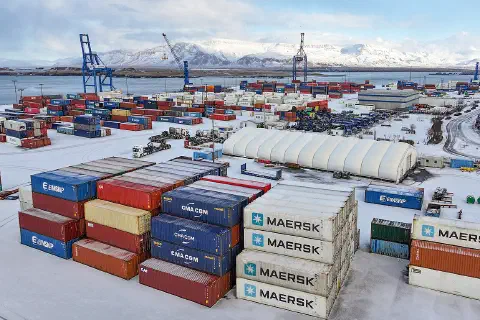
Trump's tariffs get a sturdier legal footing

The administration opened broad investigations on 2 June under Section 301 of the Trade Act of 1974, aimed at foreign forced-labour practices and digital services taxes. After heavy defeats in court over its use of IEEPA and Section 122, it wants a protectionist trade regime that is permanent and can survive a legal challenge.
How the fallbacks failed
The move follows two legal routes that collapsed. The broad tariffs imposed under the International Emergency Economic Powers Act were struck down, and Customs is now repaying the duties to importers. The temporary 10 per cent surcharge that replaced them, built on the balance-of-payments clause in Section 122, was voided by the Court of International Trade in May. Both failed for the same reason: the statute invoked did not stretch as far as the White House claimed, and judges declined to stretch it for them.
Section 301 is a different kind of tool. It does not depend on declaring an emergency or proving a monetary crisis. It asks the executive to show, through a documented process, that a foreign government's practice is unreasonable or discriminatory and burdens American commerce, and then lets it respond. The discipline lies in the procedure rather than in the size of the power.
A statute that has been tested
Emergency executive orders tend to be thrown out by judges. Section 301 has been fought over in court more than any other federal trade law and has held up. Congress passed it to remove discriminatory foreign commercial practices. It gives the United States Trade Representative (USTR) wide power to impose retaliatory tariffs, provided the agency first runs a formal investigation, takes public comment and makes the findings the statute requires.
The record is long. In 1987 Ronald Reagan used the statute to put 100 per cent duties on a range of Japanese electronics after a dispute over semiconductors. From 2018 the first Trump administration used it to impose tariffs on several hundred billion dollars of Chinese imports in successive rounds. Thousands of importers sued over the later rounds, arguing that USTR had skipped procedural steps, and the courts upheld the duties. The Biden administration kept those tariffs after the statutory four-year review and in 2024 raised several of them, including the duty on Chinese electric vehicles to 100 per cent.

That last fact matters most for anyone forecasting how long new duties will last. Tariffs under Section 301 survived a change of party in the White House and were extended by an administration that had campaigned against its predecessor's trade policy. A duty with that pedigree is closer to settled law than to an executive whim.
Narrower targets, firmer ground
Tying future duties to allegations of forced labour and supply-chain failings puts the administration on much safer legal ground. Federal courts have long given USTR findings under Section 301 wide deference.
Forced labour is a well-trodden subject in American trade law. The Tariff Act of 1930 has long barred imports made with forced labour, and the Uyghur Forced Labor Prevention Act of 2021 created a presumption that goods from China's Xinjiang region fall into that category unless the importer proves otherwise. An investigation built on the same concern draws on an established evidentiary record and on a policy goal that commands support in both parties, which makes it harder for courts or Congress to dismiss as pretext.
Digital services taxes have a history too. In 2019 USTR investigated France's levy on the revenues of large technology companies and proposed duties on French goods in response, and in 2020 it opened investigations into similar taxes in several other countries, including Italy, Spain and Britain. Those cases ended with tariffs announced and then suspended while international talks on taxing multinationals went on. Reopening them gives the administration a ready-made target list in Europe and a precedent for acting against it.
Slower, but harder to unwind
The price of legal durability is speed. The China investigation opened in August 2017 and the first tariffs arrived in July 2018, almost a year later. Hearings, written comments and published findings all take time, and each is a hook for litigation if skipped. The administration can move faster than that if it chooses, but the more it hurries, the weaker the record it will have to defend.

Once in place, Section 301 duties are sticky. The statute's four-year review keeps them alive as long as domestic industries that benefit ask for continuation, and they almost always do. Removing them requires an affirmative decision to give up leverage, which no administration of either party has shown much appetite for.
What it means for bonds and currencies
For fixed-income investors, durable tariffs cut two ways. They provide a steadier stream of customs revenue than the struck-down duties, which the Treasury can count on when planning its borrowing, and that modestly reduces the supply of new debt compared with a world of refunds and no replacement. They also keep goods prices higher for longer, which adds to inflation at a time when oil is already pushing it up, and supports the case for the Fed to keep rates where they are.
In currency markets, the targets matter. Investigations aimed at digital taxes point at the euro area and Britain, and a credible threat of tariffs on European goods tends to weigh on the euro against the dollar. Forced-labour cases point mainly at Asian supply chains, where exporters have spent years relocating production partly to escape the China tariffs and may now find the new rules follow them.
The case against durability
The counterargument is that Section 301 cannot replicate the earlier regime. It requires a specific finding against a specific country's practice, so it cannot support a single tariff on all imports from everywhere. The World Trade Organization also ruled in 2020 that the China tariffs broke international trade rules, though that decision had no practical effect because America has blocked appointments to the body's appeals court. Trading partners may retaliate against targeted duties more readily than against a blanket measure that hit everyone equally.
Those limits shape the regime more than they threaten it. The likelier outcome is a patchwork of country and sector duties, each resting on its own investigation, that collectively covers much of what the emergency tariffs did. That structure is more complicated for importers to manage and much harder for any court to throw out in one ruling.
Tariffs imposed through Section 301 will probably survive the court challenges that sank the earlier ones, so importers should plan for them to last for years rather than months.
Write to Arnav Goel at contact@thelombardreview.com
The Sunday Edition, in your inbox
India's economy, markets and money every Sunday, plus our analysis twice a week. Free.
Unsubscribe any time. See our Privacy Notice.