What company filings say about tariff risk
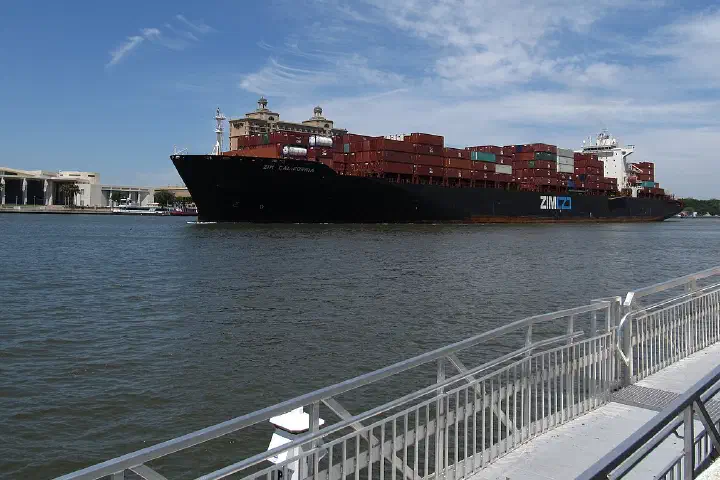
Second-quarter 10-Q filings from across the Fortune 500 split companies into two groups. Industrial and manufacturing firms warned of serious pressure on future margins from the widening Section 301 tariffs. Drugmakers, by contrast, had won themselves an unusually generous exemption.
Drugmakers get a pass
The filings show that the United States Trade Representative granted binding exclusions for about 700 pharmaceutical product classifications, with little public notice. Finished prescription drugs, cancer treatments and essential antibiotics are all shielded from the two-tier 10 to 12.5 per cent tariff schedule. For the big multinational drug groups, the exclusions protect billions of dollars in profits from factories in Ireland, Switzerland and Singapore.
The exemption extends a long tradition. Under an agreement reached during the Uruguay Round of trade talks in 1994, America and other large markets removed tariffs on most finished medicines and many of their ingredients, on the argument that taxing medicine raises health-care costs and risks shortages. Drugmakers built global supply chains on that assumption, routing production through low-tax jurisdictions where they also book much of their profit. A tariff on those imports would have landed directly on earnings, which explains how hard the industry lobbied for relief.
The geography of drug production explains the stakes. Plants in Ireland, Switzerland and Singapore make many of the best-selling medicines of the largest drug groups, and much of their output is shipped to America, the biggest and highest-priced market for prescription drugs in the world. Even a 10 per cent duty on high-margin branded medicines would have moved a large slice of profit from shareholders to the Treasury, or on to insurers and patients.
That last point was the industry's strongest argument. Branded drug prices are set by patent holders rather than by competition, so a tariff would probably have been passed on to Medicare, private insurers and patients. Generic medicines, many of them made in India by firms working on thin margins, face the opposite risk: a duty can make production uneconomic and lead to shortages, which is why essential antibiotics were among the products shielded.
What the filings must reveal
The 10-Q is a blunt instrument but a revealing one. Securities rules require companies to discuss known trends and uncertainties that are reasonably likely to affect their results, so a firm facing a material tariff bill must say so in its management discussion and update its risk factors. The contrast between the two groups therefore comes from the companies themselves, not from outside estimates. Drug groups could report the exclusions as a removed risk, while industrial firms had to describe a cost they expect to keep paying.
Everyone else pays
Industrial, car and electronics manufacturers told a different story in their filings, citing rising compliance costs and shrinking gross margins. They could not win exemptions of their own, so importers outside pharmaceuticals must either swallow the duties or raise prices and risk losing market share.
Compliance is a cost of its own. Importers must classify every product correctly, document its country of origin under the two-tier schedule and keep records that customs officers can audit, which means more staff, brokers and software. Those costs fall hardest on firms importing long lists of low-value parts, and they remain even when the duty itself is passed on to customers.
Exclusion processes have rarely favoured the small. When the USTR ran product-by-product exclusions for the tariffs on Chinese goods in 2018 and 2019, companies had to file separate requests for each product, document the absence of alternative suppliers and answer objections from domestic rivals, and most requests were refused. Large firms with trade lawyers and lobbyists could fight that process. Mid-sized manufacturers importing hundreds of parts usually could not, and they are the firms whose filings now show the squeeze.
The effect runs down the supply chain. A manufacturer paying duty on components raises its own prices where it can, pushing the cost on to customers that include hospitals, carmakers and farms. Where it cannot, the cost comes out of gross margin, and the pressure then moves to research budgets, capital spending and hiring.
The split shows up in valuations as well as margins. Industrial companies facing an open-ended tariff bill trade at a discount because analysts cannot tell how much of the duty will stick, while drugmakers enjoy the opposite certainty for as long as their exclusions last. The difference rewards political access rather than efficiency, which is an awkward basis on which to allocate capital.
Exemptions can be withdrawn
The case against treating the drug exemption as settled is that exclusions are granted by the executive and can be taken away the same way. Exclusions in past tariff rounds usually carried expiry dates and had to be renewed, and the Commerce Department opened a separate national-security investigation into pharmaceutical imports under Section 232 in 2025, a route to duties that would not depend on the USTR's list. Drugmakers' filings may therefore understate the risk. For now, though, the margin gap between the two groups is real, and it favours the firms that won relief.
The next round of filings, for the third quarter, will show whether industrial margins keep narrowing and whether any further exclusions have been granted. Changes to the exclusion list, published tariff schedules and the gross margins of mid-sized importers are the figures to follow. The filings suggest tariff relief goes to those with pull in Washington. Drug companies got 700 exclusions, while industrial importers will probably keep absorbing the duties, and their margins are likely to show it again next quarter.
Write to Arnav Goel at contact@thelombardreview.com
The Sunday Edition, in your inbox
India's economy, markets and money every Sunday, plus our analysis twice a week. Free.
Unsubscribe any time. See our Privacy Notice.