Economy
Oil fell. The Fed's problem didn't
Oil fell by more than 7 per cent on Monday, its sharpest one-day drop in months, after Tehran said contacts with Washington aimed at ending the eight-month conflict were continuing.
Oil fell by more than 7 per cent on Monday, its sharpest one-day drop in months, after Tehran said contacts with Washington aimed at ending the eight-month conflict were continuing.
Two weeks ago the yield on the ten-year Treasury note closed at 5.31 per cent, its highest close in about two decades, and talk on Wall Street was of 5.5 per cent and beyond.
American consumer prices rose 0.6 per cent in September, after 0.4 per cent in August, and 3.7 per cent from a year earlier, up from 3.4 per cent in August.
The benchmark 10-year US Treasury yield rose to 4.818 per cent on 2 September, edging closer to the 5.0 per cent mark that traders treat as a line in the sand, while Brent crude sat near $99 a barrel.
Headline consumer price inflation rose to 3.4 per cent in July, pushed up by hundred-dollar crude.
Headline consumer price inflation picked up again in July to 3.4 per cent year on year.
Front-month Brent rose 16 per cent in five trading sessions to $88 a barrel after Middle East peace talks broke up without an agreement on 28 July.
The US Strategic Petroleum Reserve (SPR) has fallen to its lowest level since 1983, according to Department of Energy figures.
A new statistical breakdown of the mid-2026 rise in inflation takes up the question that divides the Federal Reserve.
The news wires announced on 23 June that the Strait of Hormuz was open again, after regional powers signed a multilateral Memorandum of Understanding (MOU) at a formal ceremony.
Large volumes of internationally traded crude are now being priced, invoiced and settled only in Chinese yuan.
More than twenty-two merchant ships, twelve of them ultra-large crude carriers and eight of them container ships, are still at anchor and going nowhere across the northern Indian Ocean.
International mediators published a tentative framework on 28 May for ending the maritime crisis in the Persian Gulf.
Markets rallied in a jumpy, nervous fashion on 26 May on rumours that a comprehensive peace framework between Washington and Tehran, mediated by the Swiss, was close.
Brent crude sat between $105 and $108 over Memorial Day weekend, and the average price of petrol at American pumps topped $4.60 a gallon.
The chief executive of Saudi Aramco told an energy conference in Riyadh on 11 May that the world is using up its emergency stocks of crude and refined products at a rate it cannot keep up.
The Pentagon paused its naval convoy escorts through the Persian Gulf on 4 May, an embarrassing halt to its plan to reopen the route to trade.
Wholesale diesel crack spreads have climbed steeply and without pause, and energy analysts and industrial economists think they matter more than the headline Brent price that most commentators watch.
Crude fell by more than eight per cent on 7–8 April after officials from Washington and Tehran, along with regional mediators, announced a tentative and temporary ceasefire framework.
China, India, Japan and South Korea take more than eighty per cent of the petroleum that passes through the Strait of Hormuz.
Brent crude crossed $100 after the Hormuz shock, and the Treasury market split in two.
The International Energy Agency's coordinated release of 400 million barrels of crude and refined products from strategic reserves was billed as a multilateral effort with no precedent.
Jet fuel prices soared after Hormuz closed, and airlines split into two camps: those that had hedged their fuel and those buying at spot prices.
Brent crude is trading well above $100 a barrel for the first time since August 2022, and central bank economists are rushing to redo their estimates of how much will feed through into wider inflation.
Brent crude shot above $100 a barrel after war broke out in the Persian Gulf on 28 February.
American forces struck Iranian facilities on 21–22 June, after days of speculation and rising energy prices.
Israel struck Iranian military infrastructure and strategic installations on 13 June, and crude oil shot up.
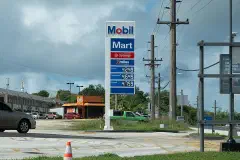
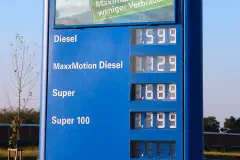
American petrol prices averaged roughly $3.59 a gallon going into Memorial Day weekend, the unofficial start of the summer driving season, and motorists have no hedge.
Saudi Arabia will keep its unilateral cut of one million barrels a day in place until the end of the year, and Brent crude is back above $90 a barrel.
OPEC+ surprised oil markets on Sunday, 2 April, by announcing a production cut of 1.16 million barrels per day.