$2trn is sitting at the Fed doing nothing
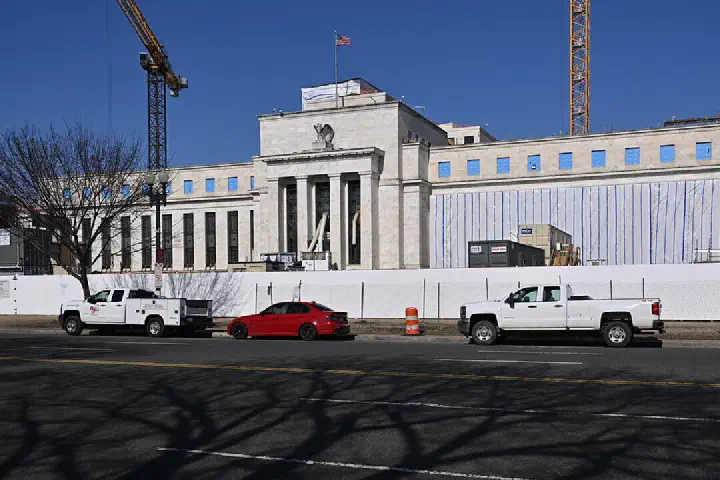
About $2.2 trillion of cash is lodged at the Federal Reserve every night. It sits in the overnight reverse repurchase facility, known as the ON RRP, where government money market funds collect an annualised 3.80 per cent straight from the central bank. Most people who have heard of the facility file it under central-bank bookkeeping. Bank treasurers and risk officers see something closer to a dam, holding back a pool of liquid money that could be lent into the private economy and instead stays parked behind the Fed's wall.
The timing is awkward. Through 2022 the Fed has been running quantitative tightening hard, letting as much as $95 billion a month of Treasuries and mortgage bonds roll off its balance sheet in order to drain money from the system. The drain has landed in the wrong place. Commercial bank deposits have taken the strain, while the reverse repo facility sits near its record high, barely touched. Trillions of dollars earn a risk-free return at the Fed just as private credit markets are getting tighter.
From a floor to a reservoir
The facility was designed as a floor under short-term rates, not as a home for trillions. For most of its life it held little. Usage took off in the spring of 2021, when the Fed's bond buying and the Treasury's drawdown of its cash account flooded the system with more money than private markets wanted. In June 2021 the Fed raised the facility's rate from zero to five basis points to stop overnight rates slipping below zero, and balances climbed from there, reaching a record of more than $2.4 trillion at the end of September this year.
The design logic is sound on paper. By offering a fixed rate to a wide set of non-bank lenders, the Fed makes sure that no money fund lends cash more cheaply in the market, which keeps its policy rate from leaking. The trouble is that a floor set too attractively stops being a floor and becomes a destination.
Why money funds park at the Fed
The cash got there because of a wide gap between what banks pay and what money funds earn. Banks have been in no hurry to lift deposit rates this year. Loan demand is sluggish and they still hold plenty of old liquidity, so average retail deposit rates are stuck near zero and deposit betas are at historic lows. Savers have noticed. They have moved hundreds of billions of dollars out of current accounts and into government money market funds.
Those funds work under tight post-crisis liquidity rules. They may buy only short-term government paper, meaning Treasury bills, agency discount notes and sovereign repo. The Treasury, however, has cut its net issuance of bills sharply over the past year, preferring to fund the deficit with longer coupon bonds, and that has left the funds short of anything to buy. The Fed filled the gap. The ON RRP takes unlimited cash, carries no risk and pays five basis points over the bottom of the fed funds target range.
Reserves take the hit
The side effect is a steady drain on bank reserves. The Fed had hoped that quantitative tightening would be absorbed mostly by money funds, which would pull cash out of the ON RRP to buy the new Treasuries issued to replace maturing debt. That has not happened. The facility pays about as much as short bills, so the funds have had no reason to move their money back into the market.

The accounting explains why. When a bond on the Fed's books matures and the Treasury refinances it with a private buyer, the buyer's bank sees its reserves fall. If the buyer is a money fund drawing on the ON RRP, the facility shrinks instead and reserves are untouched. Every dollar of run-off therefore lands on one line or the other, and which one depends entirely on who buys the replacement debt.
So as the Fed's assets shrink, the matching cut on the liability side has come straight out of bank reserves, which have fallen from more than $4.2 trillion in late 2021 to under $3.1 trillion today. If reserves keep falling at this rate while the RRP stays above two trillion dollars, the banking system will run short of reserves well before policymakers expected. That is roughly how the repo market lurched in September 2019, and a repeat is possible.
What September 2019 taught
In mid-September 2019 a routine corporate tax date and a large Treasury settlement drained reserves on the same day, and overnight repo rates spiked far above the Fed's target range. The Fed had to inject cash through emergency repo operations and then resume buying Treasury bills to rebuild reserves. Officials had believed reserves were comfortably abundant a few months earlier.
The lesson was that the level at which reserves become scarce is found only by crossing it, and that the point differs from bank to bank. Large banks hoard reserves to meet their own liquidity rules, so a system-wide total that looks ample can still leave individual lenders unwilling to part with cash when a big payment date arrives.
The case for leaving it alone
There is a respectable argument that the facility is doing its job. On this view the $2.2 trillion is simply excess liquidity that no bank wants, and it acts as a buffer: once bills become more attractive than the Fed's rate, the funds will leave the facility of their own accord, and quantitative tightening will start to drain it instead of reserves. With reserves still around $3 trillion, the system is a long way from 2019 levels.
The flaw is timing. Money funds will move only when bill yields rise clearly above 3.80 per cent, which depends on the Treasury issuing more bills. If the federal debt limit binds next year, as budget analysts expect, the Treasury will have to cut bill supply further, pushing still more cash into the facility at exactly the wrong moment. The fixes are small and technical: trim the facility's rate relative to the 3.90 per cent the Fed pays banks on reserves, or tilt Treasury issuance towards bills.
The $2.2 trillion at the Fed is a sign that the monetary plumbing has been badly set, and it is not harmless. By paying money funds a safe and generous rate, the Fed keeps trillions out of private markets and forces each month of tightening to come out of bank reserves, which will probably start to look scarce well before the Fed planned for. Until the central bank reprices the facility against Treasury bills, quantitative tightening will keep landing on bank balance sheets, about the most disruptive place it could land, and the first signs of strain are likeliest around a quarter-end or tax date next year.
Write to Arnav Goel at contact@thelombardreview.com
The Sunday Edition, in your inbox
India's economy, markets and money every Sunday, plus our analysis twice a week. Free.
Unsubscribe any time. See our Privacy Notice.