Christmas: A lump of coal from the Fed

Markets hoping for more festive generosity from the Federal Reserve found a lump of coal in their stockings. The central bank cut rates in December but raised its projections for where rates will be in future, a sign that easy easing is over.
The details were plain enough. The policy rate now sits at 4.25 to 4.5 per cent after a full point of cuts since September, but the median official expects only two more quarter-point reductions next year, half as many as projected three months ago, and has nudged up the estimate of where rates will settle in the long run. Share prices fell sharply on the day of the decision, and small companies, which depend most on cheap borrowing, fared worst.
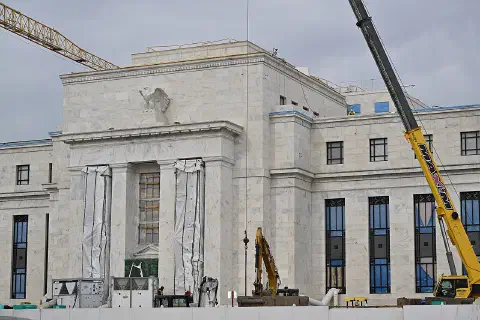
Scrooge at the Eccles Building
The committee has reason to be careful. Equity multiples are near record highs and credit spreads are about as tight as they have been, with universal import tariffs on the way. More easing would feed speculation. By pointing to a policy rate that settles near four per cent, the Fed has told investors that borrowing costs will stay restrictive for years. The holiday rally will have to be carried by earnings.
Signs of froth
The evidence of exuberance is not hard to find. The S&P 500 has risen by more than a fifth this year, led by a handful of technology giants priced for years of rapid growth. Bitcoin passed $100,000 for the first time this month. Corporate bond investors are accepting very small premiums over Treasuries to lend to companies, including those with weaker credit ratings. Each of these reflects confidence that growth will stay strong and that the Fed will be there to cushion any fall.
That confidence has a name among traders, the Fed put: the belief that the central bank will ease policy whenever markets fall far enough to threaten the economy. The December projections are, in part, an attempt to weaken that belief. A Fed that signals fewer cuts while shares are near records is telling investors not to count on it to underwrite valuations.
How rates reach valuations
The link between interest rates and asset prices is mechanical. A share is worth the discounted value of its future profits, and the discount rate starts with the yield on safe government bonds. When investors expect rates to stay high for longer, those future profits are worth less today, and the effect is largest for companies whose profits lie furthest in the future, such as fast-growing technology firms. Higher rates also make bonds and cash more attractive alternatives to shares, so money has less reason to chase risk.

That is why the Fed's shift matters more for valuations than for the economy in the short run. Two fewer cuts next year barely changes borrowing costs for most companies, but it changes the rate at which investors discount long-dated profits, and it removes a source of support that many had assumed.
A lesson from the late 1990s
The Fed has been accused before of inflating asset prices by easing into a boom. In December 1996 Alan Greenspan warned publicly about irrational exuberance in the stock market, then did little to act on the warning. In 1998 the Fed cut rates three times in response to the Russian default and the collapse of Long-Term Capital Management, and the cuts are often blamed for fuelling the final and most speculative phase of the technology bubble. Mr Powell appears determined not to repeat the second half of that story.
The case against the Grinch
The Fed's critics argue that monetary policy should not target asset prices at all. Its mandate covers inflation and employment, and if both justify cuts, the Fed should deliver them whatever share prices do. They also note that the economy has absorbed high rates for two years, that inflation, though sticky, is much lower than it was, and that tariffs may slow growth as much as they raise prices. A Fed that holds rates high to lean against speculation could end up tightening an economy that needs the opposite.
That argument is sound in principle, and the Fed would say it is following it: the projections cite sticky inflation and stronger growth, not share prices. The practical effect is the same, though. Investors will get less support from monetary policy than they expected, whatever the committee's reasons.
Who is left holding the stockings
The winners are savers and holders of cash, who will keep earning returns above inflation for longer. The losers are the assets that depend most on falling rates: unprofitable technology companies, small firms with floating-rate debt, property trusts and highly indebted borrowers. Governments, including the American one, will pay more to service their debts. Emerging markets face a stronger dollar.
What to watch
The first signs will come from corporate earnings in January, which now have to justify valuations without help from falling rates, and from the scale of tariffs announced after the inauguration on 20 January. The Fed's January meeting is widely expected to bring a pause, and any hint that officials are considering no cuts at all next year would test markets further.
The Fed will not prop up asset prices while Washington spends freely and raises tariffs. Investors counting on rate cuts to support valuations next year should plan on getting few of them. The most likely outcome is a bumpier first half of next year for richly valued shares, with earnings rather than the Fed deciding which of them keep their gains.
Write to Arnav Goel at contact@thelombardreview.com
The Sunday Edition, in your inbox
India's economy, markets and money every Sunday, plus our analysis twice a week. Free.
Unsubscribe any time. See our Privacy Notice.