How far can Europe cut before the Fed does?
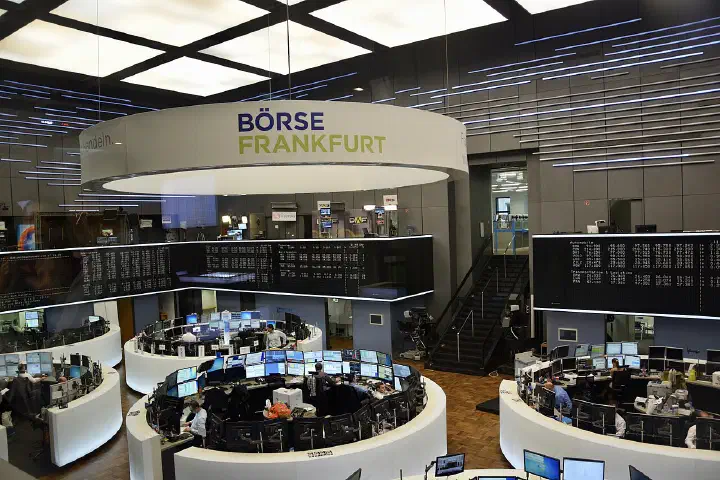
The European Central Bank is getting ready to cut rates before the Federal Reserve. Eurozone inflation has cooled toward 2.4 per cent, the economy is barely growing, and Christine Lagarde has signalled a cut in June. That would put Frankfurt ahead of Washington for once.
From 10.6 per cent to here
The ECB's case rests on how far inflation has fallen. Prices were rising at 10.6 per cent a year in October 2022, and the bank responded with ten consecutive increases that took its deposit rate from minus 0.5 per cent to 4 per cent, where it has sat since September. The economy paid for it: output stagnated through the second half of last year before growing 0.3 per cent in the first quarter. With inflation near target and growth feeble, a real policy rate well above zero looks hard to defend for long.
The data are not all friendly. The flash estimate for May, published this morning, showed eurozone inflation ticking back up to 2.6 per cent, with services prices still firm, and negotiated wage growth picked up in the first quarter. Across the Atlantic, the April core index for personal consumption expenditures, the Fed's preferred measure, rose 2.8 per cent from a year earlier, not low enough to hurry a Fed that has kept rates at 5.25-5.5 per cent since last July.
Europe would not be the first to move. The Swiss National Bank cut its policy rate in March, becoming the first major central bank to ease in this cycle, and Sweden's Riksbank followed in May. Both economies are small and open, with inflation back near target. The ECB is a much bigger player, and the euro's value against the dollar carries more weight for global trade and for the inflation it imports.

Going first, and alone
The ECB has rarely started a long easing cycle without the Fed leading the way. Cutting while the Fed stays on hold widens the interest rate gap across the Atlantic and pushes the euro down. A weaker euro makes imported energy and commodities dearer, which risks letting inflation back into the eurozone through the side door.
The mechanism is quick. Oil and most industrial commodities are priced in dollars, so a lower euro raises their cost to European buyers within days, and it feeds through to petrol and heating bills within weeks. Import prices for manufactured goods follow more slowly, as contracts roll over. The bigger danger is second-round: if firms and unions read higher energy bills as the start of a new inflation wave, they bake it into prices and wage claims.
Currency markets price the gap between expected policy paths rather than the level of rates on any given day. The euro's value against the dollar tends to track the difference between two-year government bond yields in Germany and America, because those yields summarize where investors think each central bank is heading. A June cut that the ECB presents as the first of several would widen that gap far more than one described as a one-off adjustment, which is why the language around the decision matters as much as the decision itself.
When Frankfurt went its own way
Divergence has a mixed record. In 2011 the ECB raised rates twice while the Fed held at zero, and reversed both moves within months as the debt crisis spread. In 2014 it moved the other way, taking its deposit rate below zero as the Fed wound down asset purchases, and the euro fell from about $1.39 in May of that year to below $1.05 by March 2015. The inflation that currency drop might have imported never showed up, because oil prices collapsed at the same time.

Services still running warm
The ECB's lingering worry is at home rather than abroad. Services inflation has stayed stubborn because wages are still catching up with the price rises of 2022 and 2023, and in labour-intensive industries higher pay passes quickly into prices. The acceleration in negotiated wages in the first quarter partly reflected one-off payments in Germany, which officials expect to fade. If they do not, the ECB could find that its domestic inflation problem limits its room to cut long before the currency does.
Who gains from a softer euro
Exporters gain most, particularly German machinery makers and luxury-goods houses that earn in dollars and report in euros. Households and firms with floating-rate loans, common in Spain and Italy, benefit directly from the cut. The losers are energy-intensive manufacturers, still paying more for power than before the war in Ukraine, and savers who had only just begun to earn a positive return on deposits.
Why the door may stay shut
The case against alarm is that one cut is already in the price. Markets have expected a June move for weeks, and the euro has held near $1.08, hardly the slide the pessimists fear. A single quarter-point cut does little to the rate gap if the ECB then pauses, as its officials have hinted it might. The dangers arrive only if the ECB keeps cutting at pace while the Fed stays put and oil climbs again. The indicators are the staff projections at the June meeting, the path of the euro against the dollar, services inflation over the summer and the Fed's own meeting in mid-June.
There is one further reason for the ECB to tread carefully. The Fed's own projections in March still pencilled in three cuts this year, and markets now expect fewer. If American inflation stays sticky and those cuts slip into next year, the transatlantic gap could stay wide for longer than Frankfurt planned, leaving the euro exposed for months rather than weeks. A cautious sequence of cuts with pauses between them, which several ECB officials have hinted at, is the obvious defence.
Lagarde deserves credit for acting on European data without waiting for the Fed. The bill may arrive through the euro over the summer, and if the currency slides far enough, imported inflation could limit how many more cuts the ECB can make. Expect a June cut followed by a pause in July while Frankfurt watches the exchange rate.
Write to Arnav Goel at contact@thelombardreview.com
The Sunday Edition, in your inbox
India's economy, markets and money every Sunday, plus our analysis twice a week. Free.
Unsubscribe any time. See our Privacy Notice.