India's inflation jump has a freight problem
India's consumer prices rose 5.54 per cent in the year to September, up from 4.83 per cent in August, according to provisional figures published by the Ministry of Statistics on October 12. The figure, on the new index that uses 2024 as its base year, came five days after the Reserve Bank of India raised its policy rate for the first time since 2023. On the face of it, the central bank moved just in time.
The detail is more awkward for that story. A large part of the jump came from a single vegetable, and much of the rest from precious metals. Neither responds to the repo rate. But tucked lower down the release is a figure that does support the RBI's worry, and it is about lorries, not onions.
The onion effect
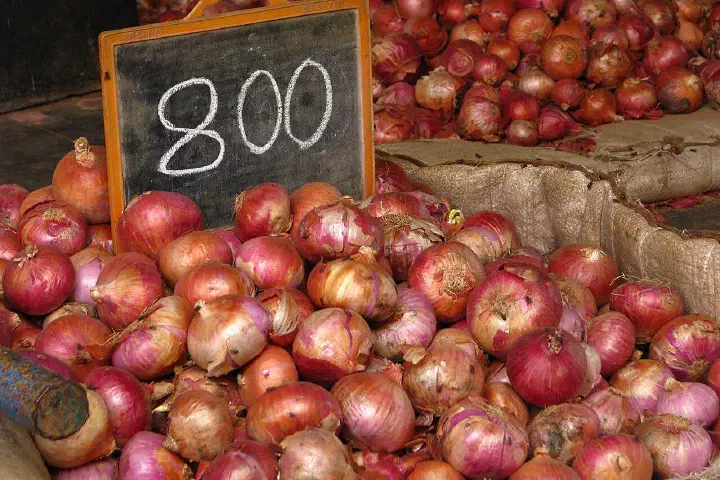
Onion prices were 108.09 per cent higher than a year earlier, up from 48.78 per cent in August. Onions carry a weight of 0.70 per cent in the index. A rough calculation, multiplying weight by price change, suggests the acceleration in onion prices alone added about 0.4 percentage points to headline inflation between August and September. Headline inflation rose by 0.71 points. On that rough arithmetic, a vegetable that makes up less than one per cent of the basket explains more than half of the month's acceleration. The exact figure depends on how far onion prices have moved relative to the rest of the basket since the base year, so it should be read as an order of magnitude.
Ginger, garlic and lemons are also on the ministry's list of the five fastest-rising items, up 62.85, 54.62 and 36.41 per cent respectively. Food inflation as a whole rose to 7.74 per cent from 5.97 per cent. The cause is mostly the weather. The monsoon ended 13 per cent short of normal, the RBI noted at its October meeting, and summer crops such as onions are where a dry season shows first. At the same time, potatoes are 11.50 per cent cheaper than a year ago and tomatoes 8.62 per cent cheaper, a reminder of how quickly vegetable prices can swing back.
Silver, gold and the 'miscellaneous' line
The second driver sits in a division called personal care, social protection and miscellaneous goods and services, where prices rose 13.75 per cent. Within it, the group the ministry calls "other personal effects", which includes jewellery, rose 38.69 per cent. Silver jewellery alone is up 87.80 per cent. These prices are set on world markets, where precious metals have soared this year, and Indian interest rates have little bearing on them.
The RBI knows this. Its own statement on October 7 reported that core inflation excluding precious metals was only 2.9 per cent in August, against 4.2 per cent including them. September's figures suggest that gap has not closed.
The number that should worry the RBI
If the story ended there, the case for further rate rises would be weak. It does not end there. The index for transport services for goods, which covers the cost of moving freight, rose 14.73 per cent over the year. The cost of running a private vehicle, mostly fuel, rose 7.46 per cent. And prices at restaurants and other food-serving businesses rose 9.39 per cent.
These are the channels through which an oil shock spreads. A lorry operator paying more for diesel raises freight charges; the shopkeeper whose deliveries cost more raises shelf prices; the restaurant facing dearer vegetables and dearer gas raises its menu. This is what central bankers mean by second-round effects, and it is the thing the RBI's monetary policy committee said it was trying to prevent when it lifted the repo rate to 5.50 per cent. A freight index rising at nearly 15 per cent a year is evidence that the second round has begun.

Elsewhere, the pressure is modest. Housing, water, electricity and fuel prices rose 2.74 per cent. Health rose 1.40 per cent. Clothing and footwear rose 3.93 per cent. Car prices are 4.51 per cent lower than a year ago. Outside food, fuel-linked services and jewellery, India does not look like an economy with a broad inflation problem.
Villages pay more
The burden is uneven. Rural inflation was 6.08 per cent, above the RBI's upper tolerance limit of 6 per cent, while urban inflation was 4.88 per cent. Rural food inflation was 8.06 per cent. Food takes a larger share of rural household budgets, so a vegetable shock hits villages harder. By state, Tamil Nadu recorded the highest rate among large states at 6.81 per cent, followed by Odisha at 6.70 per cent and Madhya Pradesh at 6.68 per cent.
What it means for December
The RBI projected inflation of 6.0 per cent for the October to December quarter, so September's 5.54 per cent is roughly on the path it expected. That cuts both ways. The committee has no surprise to react to, but nothing in the figures suggests it was wrong to tighten.
The October figures, due on November 12, will show whether onion prices have peaked as the new crop arrives. If they have, headline inflation could ease even as the freight and restaurant numbers keep climbing. That is the combination the committee should watch most closely before it meets again on December 2 to 4. Headline inflation will tell it about the weather. The freight index will tell it whether the oil shock is becoming general inflation.
Write to Arnav Goel at contact@thelombardreview.com
The Sunday Edition, in your inbox
India's economy, markets and money every Sunday, plus our analysis twice a week. Free.
Unsubscribe any time. See our Privacy Notice.