New Year: 2025 comes down to one word — tariffs

For most American finance chiefs, planning for 2025 comes down to one number they cannot hedge: the tariff rate. The effective US tariff rate ended 2024 near a modest 2.4 per cent, and CFOs have spent decades working in a world where border costs barely registered. Universal baseline levies would end that. Once governments use tariffs as a main tool of both revenue and diplomacy, the usual models for optimising supply chains stop working.
The effective rate is total duties collected divided by the value of imports, and it has stayed low because most trade with close partners flows duty-free under agreements such as the one covering North America. The duties imposed on Chinese goods in 2018 and 2019 raised it only modestly, since they applied to one country. The proposals now on the table are different in kind: a baseline duty on all imports, far higher rates on China and, as Donald Trump said in late November, 25 per cent tariffs on Mexico and Canada, America's two largest trading partners.
Rethinking the supply chain
The first problem for boards is less the size of the duty bill than the working capital tied up in buying ahead of it. Procurement teams at multinationals are rushing orders in before any executive action, and the cost of carrying that inventory mounts while interest rates stay uncomfortably high. Expect guidance at the coming fourth-quarter results to come with wider ranges. Companies will concede that protecting margins now depends on how much of the tariff they can pass on to customers.
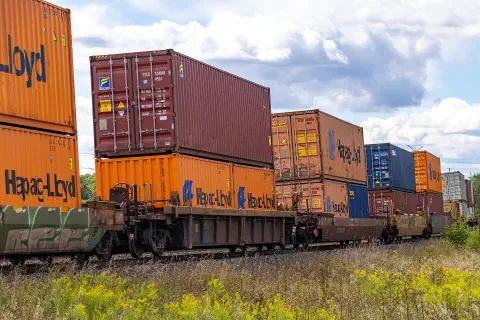
The pattern is familiar from the last round. In late 2018, when Washington scheduled an increase in duties on Chinese goods, importers pulled forward orders to beat the deadline, and imports from China jumped before falling back sharply the following year. Warehouses filled, freight rates rose and companies ended up carrying stock they had bought early at a cost. The same thing is happening now on a wider scale, since the proposed duties would cover almost every supplier country.
Tools that soften the blow
Finance teams do have some defences. Goods can be held in foreign-trade zones or bonded warehouses, where duties are deferred until the goods enter the domestic market, which helps with cash flow if not with the final bill. Importers buying through intermediaries can sometimes declare the lower price paid to the original manufacturer, reducing the dutiable value. Some products can be redesigned or reclassified to fall into lower tariff categories. None of these changes the basic arithmetic of a broad duty, but they explain why large importers with sophisticated customs teams will cope better than smaller rivals.
Currency movements may also help. When tariffs are imposed, the dollar tends to strengthen, making imports cheaper in dollar terms and offsetting part of the duty. That offset is uneven, and it cannot be relied on for planning, but it is one reason the full tariff rarely shows up in final prices.

Which legal route matters
For CFOs, how tariffs are imposed matters almost as much as their level. Duties under Section 301, used against China in 2018, follow an investigation and tend to be targeted. Section 232, used for steel and aluminium on national-security grounds, allows sector-wide duties. Emergency economic powers could be invoked for faster, broader action, and a separate provision of trade law allows a temporary across-the-board surcharge of up to 15 per cent for a limited period. Tariffs imposed by executive order can be lifted just as quickly, which makes them a weak foundation for a decade-long investment.
Investment on hold
Capital budgets rest on predictable hurdle rates and steady depreciation. The threat of universal tariffs adds a heavy and lopsided discount to any long-term factory project. Building a new plant at home takes years, while keeping offshore suppliers leaves free cash flow exposed to steep border levies. Until Congress or the White House puts the tariff regime into law, most companies will probably sit on their cash and push big projects back, well into 2025 and perhaps beyond.
That hesitation has costs of its own. Projects deferred now will not add capacity when it might be needed, and suppliers of equipment and construction services will feel the delay first. Companies that do commit early, betting on permanent protection, risk being left with high-cost domestic plants if the duties are later negotiated away.
Winners and losers
The winners are domestic producers with spare capacity and pricing power, and the providers of warehousing and logistics that benefit from stockpiling. The losers are importers with thin margins, such as discount retailers, and manufacturers that rely on components crossing the Mexican and Canadian borders many times before a product is finished, as carmakers do. Smaller firms without the scale to manage customs complexity or negotiate with suppliers will struggle most.
What to watch
The inauguration on 20 January is the first marker, and executive orders in the following days will show which legal routes the administration chooses. The views of the incoming trade representative, Jamieson Greer, the commerce secretary nominee, Howard Lutnick, and the Treasury nominee, Scott Bessent, will signal how aggressive the programme will be. Fourth-quarter earnings calls in late January will show how many companies are building tariff costs into guidance.
The likeliest outcome is a first quarter of heavy stockpiling and cautious guidance, followed by a spring in which companies learn the rates and start passing them on. Mid-sized importers and North American carmakers will feel the squeeze first, and capital spending on new factories will stay subdued until the rules look durable.
Write to Arnav Goel at contact@thelombardreview.com
The Sunday Edition, in your inbox
India's economy, markets and money every Sunday, plus our analysis twice a week. Free.
Unsubscribe any time. See our Privacy Notice.