Tariff refunds mean more government borrowing
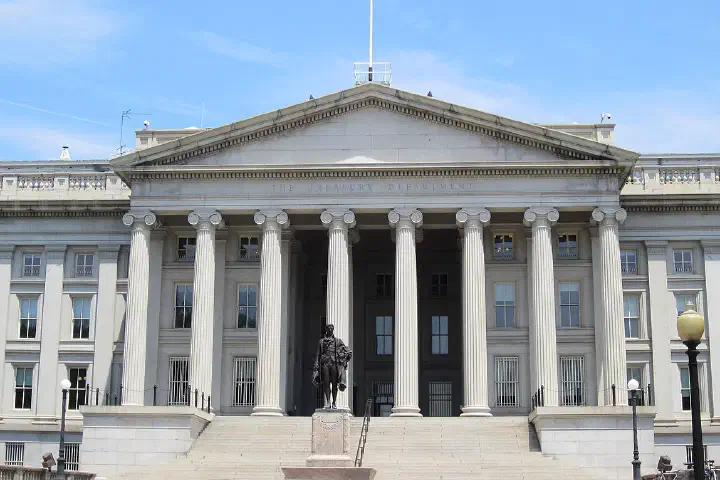
The Treasury has updated its borrowing plans, and they make for sober reading. Paying the court-ordered $166 billion in tariff refunds will mean a large and immediate increase in net Treasury bill issuance for the rest of the fiscal year.
Every refund is borrowed
The federal deficit is already running at close to $2 trillion a year, so the Treasury has no spare cash to meet court orders. Every dollar of the $166 billion must come from new borrowing. To keep its cash balance above the minimum it needs to operate, the Treasury has sharply increased the size of its weekly auctions of 4-week, 8-week and 17-week bills.
Bills are the obvious instrument because they can be scaled up quickly. The Treasury changes the sizes of its longer note and bond auctions only gradually, at its quarterly refunding announcements, to avoid surprising investors in the long end of the market. Bill auctions can be enlarged from one week to the next, and cash management bills can be added at a few days' notice. When a large, unplanned outflow arrives, the short end takes the strain first.
Following the cash
The plumbing explains why the timing matters. The Treasury keeps its cash in an account at the Federal Reserve. When it pays refunds, money leaves that account and lands in importers' bank accounts, which adds to bank reserves. When it sells bills to replace the cash, investors pay with money drawn from bank deposits or money-market funds, which drains reserves again. The net effect on the banking system depends on who buys the bills and where their cash was sitting before.
For several years, the answer was reassuring. Money-market funds held enormous sums in the Fed's overnight reverse repurchase facility, and when the Treasury issued more bills, the funds simply moved cash out of that facility and into the higher-yielding bills, leaving bank reserves largely untouched. That buffer has since dwindled to low levels. New bills now have to be financed more directly from bank deposits and reserves, and that is where strain in money markets tends to show up.
Strain at the short end
Hundreds of billions of dollars in new bills are testing how much the money markets can take. Money market funds and primary dealers, held back by regulatory leverage limits, want higher yields before they will hold the extra supply, and short-term benchmark rates are rising.

The leverage limits matter because dealers are the market's shock absorbers. When supply outpaces demand from end investors, dealers buy the excess and finance it in the repo market until buyers appear. Rules that require big banks to hold capital against all assets, including safe ones such as Treasury bills, make that intermediation more expensive, so dealers demand a higher yield before they take on more. The result is that bill yields rise relative to the Fed's policy rate, and repo rates, which are tied to the cost of financing Treasuries, drift up with them.
What past episodes suggest
Two precedents mark out the range of outcomes. After the debt-ceiling standoff ended in June 2023, the Treasury rebuilt its cash balance with a surge of bill issuance running to hundreds of billions of dollars within a few months, and markets absorbed it smoothly because money funds had ample cash in the reverse repo facility to redeploy. In September 2019, by contrast, a corporate tax date and a large Treasury settlement drained reserves at a moment when they were already scarce, and overnight repo rates spiked far above the Fed's target range, forcing the central bank to inject liquidity.
Today's position sits between the two. The reverse repo buffer that eased 2023 has largely been used up, but reserves are not as scarce as in 2019, and the Fed now has a standing repo facility that allows eligible banks to borrow against Treasuries at a set rate. That facility should cap how high overnight rates can go, though it cannot stop bill yields from rising within that ceiling.
Winners and losers
Savers in money-market funds, whose assets have grown to record levels in recent years, will earn slightly higher yields as the funds buy the new bills at better rates. Importers receiving refunds gain the most directly. The Treasury pays more to borrow, and so does everyone whose loan rates are tied to short-term benchmarks such as the Secured Overnight Financing Rate, from leveraged companies to hedge funds financing bond positions.
The case for calm
The strongest counterargument is scale. The bill market runs to several trillion dollars, and $166 billion spread over the rest of the fiscal year is large but not overwhelming. Money funds have grown steadily and have a structural appetite for bills, and the Treasury can spread the extra issuance across maturities to avoid congestion. If refunds are paid more slowly than planned, the pressure will be milder still. The column's worry is less about the size of the sum than about when it arrives: the refunds are coming on top of existing deficits, at a time when the market's usual buffer is thin.
What to watch
The Treasury's quarterly refunding announcement in early August will show how much of the extra borrowing it plans to push into bills and whether it will raise note and bond sizes. The daily Treasury statement will track the pace of refund payments and the level of the cash balance. The spread between the Secured Overnight Financing Rate and the interest the Fed pays on reserves is the best single gauge of whether money markets are straining.
Importers get a large earnings boost from the refunds, but the Treasury is paying with borrowed money, and short-term rates will probably keep drifting higher until the bill supply is absorbed. Expect bill yields to trade above the policy rate through the end of the fiscal year in September, and repo to spike around quarter-end and tax dates if refund payments bunch up.
Write to Arnav Goel at contact@thelombardreview.com
The Sunday Edition, in your inbox
India's economy, markets and money every Sunday, plus our analysis twice a week. Free.
Unsubscribe any time. See our Privacy Notice.