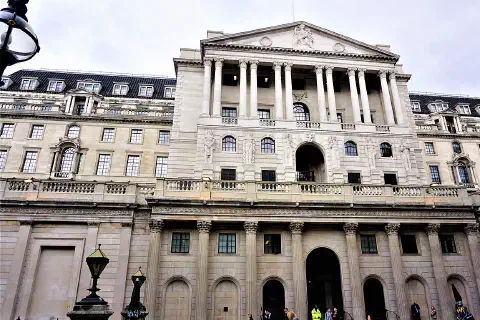
The Bank of England takes away the safety net

The Bank of England said on 28 September that it would buy up to £65 billion of long-dated gilts to stop a collapse among UK pension funds, and it promised that the backstop would end at 5:00 PM on Friday, 14 October. For the next fortnight investors told themselves the Bank would blink and extend the facility at the first sign of renewed stress. That hope died on 18 October, when the backstop was confirmed as over and the gilt market had to clear without official help.
The Bank could withdraw the safety net because the government had given in completely. On 17 October the new chancellor, Jeremy Hunt, carried out the most humiliating fiscal reversal in modern British history, scrapping almost every part of the unfunded growth plan announced barely three weeks earlier. The energy price guarantee was cut back and the planned tax cuts were dropped, and the Treasury promised serious fiscal tightening. By removing the net, Governor Andrew Bailey made the politicians restore fiscal credibility at gunpoint.
A fortnight of retreat
The surrender came in stages. On 3 October the government dropped the abolition of the 45p top rate of income tax. On 14 October, the day the Bank's purchases stopped, Liz Truss dismissed Kwasi Kwarteng as chancellor and announced that the planned rise in corporation tax to 25 per cent would go ahead after all. Mr Hunt then went much further, reversing most of the remaining tax cuts, postponing the cut in the basic rate of income tax indefinitely and limiting the universal energy price guarantee to next April, after which it will be reviewed. Only the stamp duty cut and the reversal of the national insurance rise survived.
Letting the market clear
Refusing to extend the purchases was a calculated gamble. In the days before the deadline, pension fund managers begged for more time, arguing that they had not finished restructuring their portfolios and that markets were still fragile. The Bank judged that extending an emergency operation would create moral hazard and risk turning a temporary stability measure into permanent fiscal dominance.
It did widen the exits before closing the door. On 10 October the Bank launched a temporary repo facility that let banks borrow against a broader range of collateral, so that they could lend on to pension funds, and on 11 October it extended its purchases to index-linked gilts, where the selling had moved. The same day Mr Bailey told pension funds in public that they had until the Friday to finish rebuilding their positions. The message was that help existed, but on the Bank's timetable and on terms designed to end.
By making the market stand on its own from Monday, 17 October, the Bank wanted to restore normal price discovery. A working government bond market cannot depend on an open-ended bid from the central bank to keep volatility down. Pension funds and clearing houses that need collateral must now find it through private credit lines, calls on their corporate sponsors or ordinary trading, and cannot keep leaning on the printing press.

The gilt market sets the limit
The episode has restored a limit on government borrowing. The gilt market drama and the fiscal surrender that followed showed that spending is capped less by parliamentary majorities than by how much debt the gilt market will absorb. The Bank of England made clear that it will step in to prevent a breakdown in settlement, and that it will not be a permanent shock absorber for reckless political decisions.
For investors, the end of the backstop means gilt yields must now carry a genuine premium for liquidity and volatility. The curve has steadied somewhat since the chancellor's retreat, with ten-year yields settling near 4 per cent. Trading conditions remain poor, though, with primary dealers quoting wide bid-ask spreads and showing little appetite to hold risk.
The structural buyer at the long end has also changed its behaviour. Pension schemes that survived the margin calls are holding far larger cash buffers against their hedges, which means less leverage and so less demand for long gilts per pound of assets. The Bank's own plans reflect that: it has said that when it starts selling gilts from its quantitative easing portfolio on 1 November it will initially leave the long end alone.
Canada paid the same price
Britain is not the first rich country to be disciplined this way. Canada spent the early 1990s running large deficits while its borrowing costs climbed and its currency weakened, and in 1995 the finance minister, Paul Martin, responded with a budget of deep spending cuts. The federal budget was back in balance within a few years and the debt burden fell steadily thereafter. The lesson Canadians drew was that the bond market's patience ends abruptly, and that regaining its trust takes years of dull arithmetic rather than a single statement.
Who pays for credibility
The costs of the repair are now being allocated. Households lose the tax cuts they were promised and face a shorter energy guarantee, and the Treasury has warned of spending decisions that will be difficult. Mortgage borrowers gain a little, because swap rates have fallen from their late-September highs and lenders are beginning to reprice fixed-rate deals. Gilt investors gain most directly, since the reversal removed the extra supply of debt that had been sending long yields up.
The case against the Bank's decision is that it removed the net before anyone knew whether the fragility had gone, and that one more shock could force it to return on worse terms. That risk is real. Its answer is that the Bank will always act against a breakdown in market functioning, so the net has been folded away and not destroyed; what it has refused is to cap yields for a government that will not fund its own plans. The medium-term fiscal plan due on 31 October and the Bank's rate decision on 3 November will show whether that line holds.
The Bank ended its emergency operation having bought a modest £19.3 billion of gilts, well short of the £65 billion ceiling. By closing the facility on schedule the Bank protected its inflation-fighting credibility, and pension funds and other gilt holders will now bear the full swings in yields themselves. The next British government that tests the gilt market should not expect an automatic rescue, and the Treasury's autumn plan will be judged by the gilt market within hours of its publication.
Write to Arnav Goel at contact@thelombardreview.com
The Sunday Edition, in your inbox
India's economy, markets and money every Sunday, plus our analysis twice a week. Free.
Unsubscribe any time. See our Privacy Notice.