The Fed has found its cheapest weapon: going big early
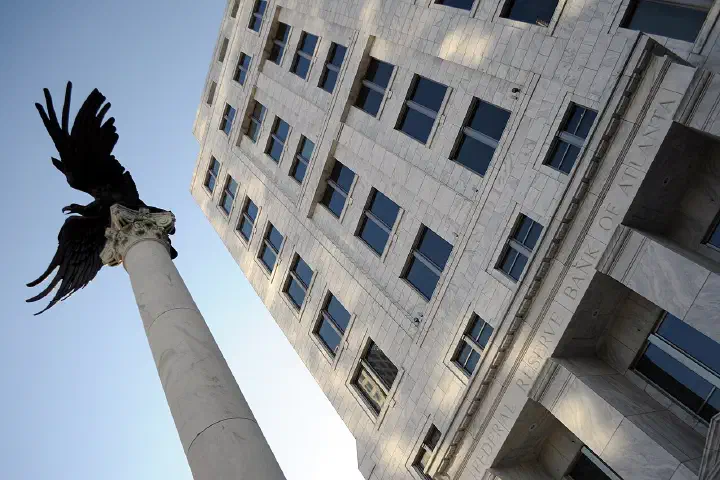

The Federal Reserve has found that speed is cheap. By front-loading its rate rises, delivering the big increases at the start of the tightening cycle, it hopes to reduce the total cost of the adjustment that follows. When Jerome Powell gave his eight-minute speech at Jackson Hole on 26 August, the policy rate sat in a modest target range of 2.25 to 2.50 per cent. Bond traders had already done much of the committee's work for it. They had pushed expectations for the peak rate towards 4 per cent and knocked down the share valuations that had been built on hopes of an early dovish turn.
The logic of front-loading is psychological. If corporate treasurers and wage negotiators believe the Fed will tolerate some balance-sheet pain now, less pain should be needed later. Quarter-point steps give companies time to adapt: they refinance their debt and pass higher input costs on to customers. Back-to-back rises of 75 basis points leave no such time. Finance directors shelve capital spending and hiring, and run down inventories, before pricing power has a chance to take hold.
Four meetings, 225 basis points
The committee came to this late. It held its target range at zero to 0.25 per cent until March, then raised it by a quarter point, by half a point in May and by 75 basis points in both June and July. The June increase was the largest since 1994. After Jackson Hole, futures traders lean towards a third 75-point move when the committee meets on 20 and 21 September.
The Fed began shrinking its balance sheet in June by letting bonds mature without reinvestment, and this month the monthly cap on that run-off doubles to $95bn, split between $60bn of Treasuries and $35bn of mortgage-backed securities. Private buyers must absorb every bond the Fed stops rolling over, which pushes term premiums up alongside the policy rate.
The committee's own forecasts have struggled to keep pace. In June the median official expected the policy rate to end this year at 3.4 per cent, a projection that futures markets have already overtaken. New projections arrive with the September decision, and a median that simply ratified market pricing would tell traders the Fed still means to go further.
Real yields do the work
The policy works through real interest rates. Two-year real yields climbed out of negative territory within five months, so the Federal Open Market Committee has squeezed into a single quarter what used to take a two-year campaign. The speed of the move matters as much as its size. Companies that spent a decade rolling over debt at negligible credit spreads now find that the risk-free benchmark can move higher between the launch of a bond deal and its final allocation.
So the adjustment arrives through the price of money more than through its availability. When funding costs rise this fast, banks and dealers take losses on the paper they are holding in inventory. Leveraged-loan and high-yield deals stall, and commercial paper programmes shorten their maturities to days from weeks. The Fed regards this friction as proof that its policy is biting, and has shown little interest in soothing it. Tighter financial conditions slow demand, and they also shut down speculative lending where it starts.

The dollar exports the squeeze
A central bank moving this fast also tightens everyone else's policy. The dollar stands at its strongest in two decades against a basket of major currencies, the yen has fallen to its weakest against it since 1998 and the euro has slipped below parity. Countries that buy oil and food priced in dollars import inflation on top of their own, and emerging-market borrowers with dollar debts see their repayment burdens swell in local currency. Other central banks are pushed into faster rises of their own, which in turn weakens foreign demand for American exports.
At home the first casualty is housing. The average 30-year fixed mortgage rate has risen by more than two percentage points since January, and sales of existing homes fell in July for the sixth month running. Savers sit on the other side of the trade: short-dated Treasury bills and money-market funds pay a visible return for the first time since early 2020, and banks collect more on floating-rate loans well before they raise what they pay depositors.
No time to watch the lags
Front-loading also costs the Fed its option to wait. A committee moving in large steps cannot see the long and variable lags of its policy before it commits to the next increase. Each 75-basis-point rise hits asset prices at once, while the slowdown in the real economy arrives some eighteen months later. The Fed is driving with its foot flat on the brake and trusting that the car stops before it reaches the ditch.
What 1994 suggests
The nearest precedent is 1994, when the Greenspan Fed doubled its policy rate from 3 per cent to 6 per cent in a year. Bondholders took heavy losses and the damage surfaced in odd places: Orange County in California went bankrupt in December after leveraged bets on low rates soured, and Mexico devalued the peso the same month. The American economy nonetheless avoided recession, and the expansion ran on for the rest of the decade. The difference is the starting point: that Fed acted pre-emptively with inflation around 3 per cent, while this one is chasing a July rate of 8.5 per cent.
The strongest objection is that the Fed is tightening into a slowdown already under way: official estimates show output falling in both the first and second quarters, and housing has cooled sharply. A committee blind to its own lags could push rates well past what the economy needs. The rebuttal is the 1970s, when the Fed under Arthur Burns eased as soon as activity faltered and inflation returned higher each time.
The labour market also argues against an imminent slump. Employers added 315,000 jobs in August and unemployment, at 3.7 per cent, sits close to its lowest in half a century. An economy that shrinks on paper while hiring at that pace gives the committee little reason to fear it has already gone too far, and every reason to suspect that wage growth, not output, is the number it must bend.
Where the bet is settled
Front-loading is an attempt to find a shortcut through the business cycle. By shortening the tightening phase, the Fed hopes to anchor long-term inflation expectations without pushing the economy into a long balance-sheet recession. The August price report and the projections published at the September meeting will show whether the shortcut is holding. Whether markets can absorb such a compressed repricing without something breaking is the big unhedged bet of 2022.
For corporate treasurers the sums are no longer hypothetical. Investment-grade companies with debt falling due between 2023 and 2025 cannot count on the usual luxury of refinancing early and in good order. Rolling five-year paper at 4.5 per cent when the maturing bonds were struck at 1.75 per cent takes hundreds of millions out of cash flow after interest. The Fed banks the credibility from going big early. Investment-grade borrowers refinancing between 2023 and 2025 will pay for it, one maturity at a time, and the first to feel it will be the lower-rated issuers who come to market next spring.
Write to Arnav Goel at contact@thelombardreview.com
The Sunday Edition, in your inbox
India's economy, markets and money every Sunday, plus our analysis twice a week. Free.
Unsubscribe any time. See our Privacy Notice.