The import rush that will shrink GDP
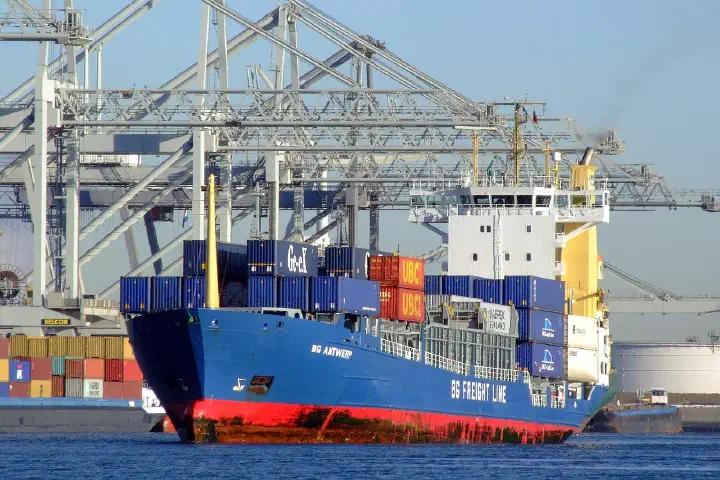
America's goods trade deficit hit a record of about $162 billion in March, as importers rushed cargo into American ports ahead of tariff deadlines. The rush clogged logistics networks and filled nearly every spare warehouse on the West Coast. National accountants are now bracing for the hangover in the statistics.
The figure comes from the Commerce Department's advance report on goods trade, published only a day before the first estimate of first-quarter GDP. It caps a quarter in which the monthly deficit kept setting records. In January much of the surge was gold bullion flown into New York as traders worried the metal might be caught by duties. By March the increase was dominated by ordinary merchandise, with consumer goods such as medicines leading the way.
Buying months ahead
Companies stockpiled furiously before the tariffs took effect, bringing forward months of planned inventory purchases. Retailers chartered whole container ships to bring in furniture, footwear and consumer electronics, and industrial fabricators hoarded steel and electronic parts. Paying for all this drained corporate cash and credit lines and pushed up freight rates for a while.
The deadlines arrived one after another, and each gave buyers a fresh reason to order early. Duties of 25 per cent on steel and aluminium took effect in March. A 25 per cent levy on imported cars followed at the start of April, and on 2 April the White House announced tariffs on almost every trading partner, with a 10 per cent baseline and much higher rates for dozens of countries. The steeper rates were suspended for 90 days a week later, except for China, whose rate climbed to 145 per cent.
Imports come off GDP
Imports are subtracted in the expenditure calculation of GDP, so the $162 billion deficit takes a large bite out of headline growth for the first quarter. When the stockpiling stops in the second quarter, activity at the ports is likely to dry up sharply.
Where the offset goes missing
The subtraction exists only to avoid counting foreign output as American. An imported sofa is recorded as consumer spending when a household buys it, or as inventory investment while it sits in a warehouse, and the import entry cancels it out. In a tidy world a stockpile of imported goods would leave GDP unchanged, because the rise in inventories would match the rise in imports.
The advance estimate is not tidy. Inventory data arrive later and less completely than trade data, so the first estimate leans on assumptions that can miss a sudden build. Goods sitting in bonded warehouses or still in transit can land in one quarter's trade figures and another quarter's inventories. Gold is a further wrinkle, since statisticians treat bullion bought as a store of value differently from goods that are used or sold. Each of these gaps pushes the headline lower than the underlying economy warrants.

A preview from Brexit
Britain ran a version of this experiment in 2019. Manufacturers stockpiled parts and materials ahead of the original Brexit deadline at the end of March, and output grew briskly in the first quarter. The economy then shrank in the second quarter as firms ran those stocks down and several carmakers brought forward their summer shutdowns. Read quarter by quarter, the figures suggested a boom and then a slump. Averaged over the half-year, they showed an economy growing slowly throughout.
America's pattern is likely to be the mirror image in the headline, with a weak first quarter and a flattering second, but the lesson is the same. The quarterly figures tell readers when goods crossed the border, and they say little about how much households and firms are spending.
Who carries the stock
Holding goods is not free. With the Federal Reserve's policy rate at 4.25-4.5 per cent, every month of extra inventory financed on a credit line costs money, as does the warehouse space itself. Owners of logistics property near the big ports have been the clearest winners, since space left empty by a wave of new building over the past two years was quickly filled. Large retailers with strong balance sheets could afford to buy ahead, while smaller importers without spare cash or credit are now facing the duties with no cushion.
The losers come later in the chain. With a 145 per cent duty making most Chinese goods uneconomic, bookings for ships leaving China for America fell sharply in April, and the ports of Los Angeles and Long Beach have warned of much thinner arrivals in May. Fewer boxes mean fewer shifts for dockworkers, fewer loads for truckers and railways, and weaker business for the warehouses that were overflowing only weeks ago. A company that paid peak freight rates to beat a deadline also loses if the duty is later cut, because rivals who waited will buy the same goods more cheaply.
The case for a milder hangover
The strongest objection is that trade distortions wash out over two quarters. If imports fall in the second quarter, net exports will add to growth by roughly as much as they subtracted in the first, and a quarter of weak port traffic need not mean a weak economy. Services, which make up most of American output, are barely touched by any of this. On that view the damage is purely statistical.
That argument is sound for the headline and weaker for the real economy. Warehouses stuffed with goods bought early do not need restocking, so orders to suppliers and freight volumes will stay low until the stock is sold. If demand softens over the summer, some of those goods will have to be discounted, which hurts retailers' margins. And the suspension of the higher tariffs expires in early July, so importers face another deadline and another temptation to buy ahead, which could make the swings larger still.
What to watch
The first-quarter GDP estimate will show how much of the import surge was offset by inventories. The measure worth watching is real final sales to private domestic purchasers, which strips out trade, inventories and government and gives the cleanest read of demand. After that, monthly container counts at the big West Coast ports, the imports and inventories components of the manufacturers' surveys, and the Fed's meeting in early May will show whether the hangover is confined to the statistics. The import rush will make first-quarter GDP look worse than the economy really is, and it will probably leave warehouses overstocked and ports quiet through the summer as companies work through the goods they bought early. The first-quarter print is likely to be close to zero or below it, the second quarter will probably look flattered by falling imports, and the workers who move boxes on the West Coast will feel the slump well before July.
Write to Arnav Goel at contact@thelombardreview.com
The Sunday Edition, in your inbox
India's economy, markets and money every Sunday, plus our analysis twice a week. Free.
Unsubscribe any time. See our Privacy Notice.