Wall Street's fear gauge hits 65. What happened?
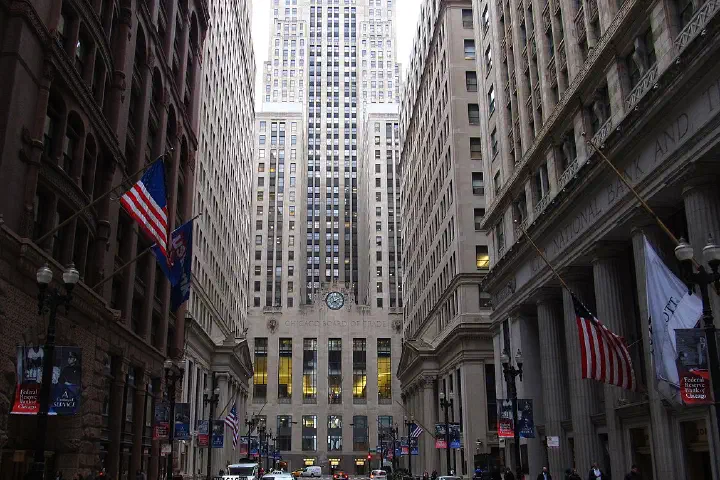
The Cboe Volatility Index (VIX) hit 65 during trading on Monday, 5 August, a level of fear seen before only during the 2008 Lehman collapse and the 2020 pandemic shock. On the same day Japan's Nikkei 225 fell 12.4 per cent, its worst single-day drop since 1987.
The backdrop was real enough. A weak American jobs report the previous Friday had raised fears of recession, and the Bank of Japan's rate rise the week before had set off a rush out of trades funded with borrowed yen. By Monday morning in New York, Asian markets had crashed and futures pointed to a heavy open. The question is whether the VIX reading measured that fear accurately, and the evidence suggests it did not.
A squeeze in the options market
Big institutions were not dumping shares wholesale. The spike in the VIX came from a sudden shortage of liquidity in short-dated options. Market-makers who were short deep out-of-the-money put options had to scramble to hedge, and in doing so they bid up implied volatility. What looked on screens like a global panic was largely a mechanical dislocation in the derivatives market.
Traders noticed the gap between the index and the market straight away. VIX futures, which settle on the index but trade on their own supply and demand, rose far less than the spot reading on Monday morning, a sign that professionals doubted the index would stay near its peak. The episode has revived an old debate about whether a measure calculated from quotes rather than trades should carry so much weight in risk systems and headlines.

How the index is built
The VIX measures expectations rather than movement. It is calculated from the prices of options on the S&P 500 across a wide range of strike prices, and it estimates how volatile investors expect the index to be over the next thirty days. Out-of-the-money put options, which pay off only if the market falls sharply, carry heavy weight in the calculation. When those puts become expensive, the VIX rises, whatever the stock market itself is doing.
That design has a weakness. The index uses the midpoint between the prices at which dealers will buy and sell each option. Much of Monday's spike came before the regular session opened, when S&P 500 options traded thinly and dealers, uncertain and short of inventory, quoted very wide spreads. Wide spreads push the midpoint up, and the VIX with it, even if few trades take place at those prices. The index was reporting the dealers' caution as much as investors' fear.
Out of proportion to the sell-off
The stock market's actual moves tell the story. The S&P 500 fell about 3 per cent on Monday, a bad day but not a crash. The VIX, having touched 65 before the open, closed the session below 40, and by the end of the week it was back near 20. In March 2020, by comparison, the VIX closed above 80 on a day when the S&P 500 fell by roughly 12 per cent, and in the autumn of 2008 its peaks coincided with a banking system on the edge of failure. A reading that briefly matched those episodes, then halved within hours, was measuring a plumbing problem.
The growth of very short-dated options has made the system more fragile in this respect. Contracts that expire within a day now make up a large share of trading in S&P 500 options, and many investors sell them to collect premium. When markets gap lower overnight, the dealers on the other side of those trades must hedge quickly in thin conditions, which amplifies moves in implied volatility.

A precedent from 2018
The closest parallel is February 2018, when the VIX more than doubled in a single session. That spike destroyed exchange-traded products that had bet on low volatility, forcing them to buy VIX futures at the worst moment, which pushed the index higher still. As on Monday, the move in the VIX was far larger than the fall in share prices, and it reversed within days. Much of the damage was confined to investors who had sold volatility with leverage.
The case against complacency
It would be wrong to say nothing happened. The yen carry trade was unwinding, the jobs data had turned, and the Nikkei's collapse was a genuine market event, with the index rebounding by more than 10 per cent the next day only after heavy losses had been realised. Some investors were forced sellers, and a volatility spike can itself trigger more selling, because risk models used by many funds cut exposure automatically when measured volatility rises.
Those forced sales matter, but they are a consequence of the spike rather than evidence that it reflected a lasting change in risk. Once hedges were in place and spreads narrowed, the pressure eased, which is why the reading fell so fast.
What to watch
The next tests arrive quickly. American consumer price figures and retail sales data next week will show whether the recession scare was justified, and the Fed's Jackson Hole symposium later in the month will indicate how fast rate cuts will come. In the options market, the gap between near-dated and longer-dated VIX futures is a useful gauge; when short-dated volatility trades well above longer-dated volatility, stress is acute, and a return to the normal pattern signals that it has passed.
The VIX reached 65 mainly because options dealers needed to hedge, and much less because investors feared a crash. Readings driven by hedging tend to fade within days, and investors who sold into the spike probably sold close to the bottom. Unless next week's data confirm a recession, expect volatility to settle back towards its pre-crisis range within weeks, with the losses concentrated among leveraged sellers of short-dated options and those who panicked at Monday's open.
Write to Arnav Goel at contact@thelombardreview.com
The Sunday Edition, in your inbox
India's economy, markets and money every Sunday, plus our analysis twice a week. Free.
Unsubscribe any time. See our Privacy Notice.