The recession forecast caused by gold bars

The Atlanta Fed's GDPNow model dropped abruptly to an annualised −2.8 per cent for the first quarter, and markets took fright. Commentators rushed to announce a deep recession. Quantitative analysts found a stranger cause. Imports of non-monetary gold bars had thrown the trade figures badly out of line.
A model that reads every release
GDPNow is a running tally rather than a forecast in the usual sense. It takes each new data release, from retail sales to construction spending, and plugs it into the same accounting identity the Bureau of Economic Analysis uses to build GDP, updating the estimate several times a month. That makes it quick and transparent, and also literal: it has no judgement about whether a number makes economic sense. When the goods trade figures for January showed an enormous jump in imports, the model subtracted the lot from its estimate of output.
The swing was violent. At the start of February the model had been pointing to comfortably positive growth, in line with the solid pace of late 2024. It turned negative at the end of the month after the advance trade figures and consumer spending data, and fell further on March 3rd. The full trade report released this week confirmed the scale of the import surge, with the overall deficit for January reaching a record $131.4 billion.
Gold counted as an import
Net exports feed straight into the expenditure calculation for GDP. In early 2025 geopolitical worry and heavy central bank buying of bullion sent record volumes of physical gold through London, Zurich and New York. Gold imports are booked as merchandise imports, and nothing offsets them in the domestic consumption figures, so the flood of bullion knocked hundreds of basis points off the model's estimate of net exports.
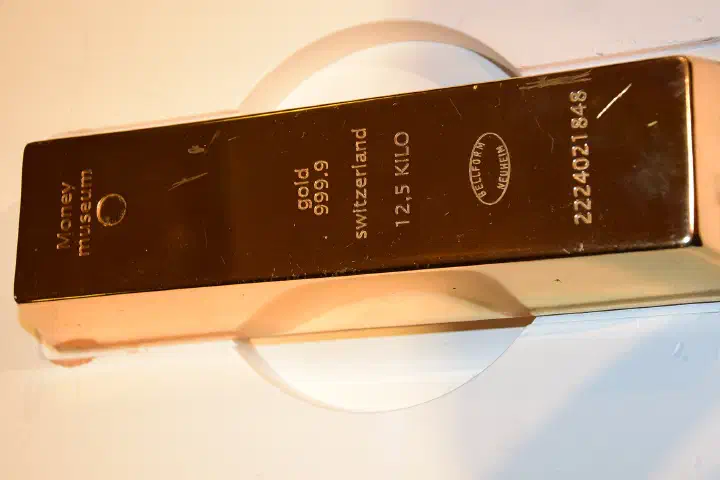
Tariffs supplied the immediate trigger. Traders feared that precious metals might be caught by new American import duties, and the price of gold for delivery in New York rose above the price in London by far more than the usual cost of moving it. That gap made it profitable to fly bars across the Atlantic, often via Swiss refiners that recast the large bars used in London into the smaller ones accepted on the New York exchange. Stocks in COMEX-approved vaults swelled, while banks in London queued to withdraw bars from the Bank of England's vaults. Each shipment counted as an American import, though the gold was simply moving from one vault to another.
Why the official figure will differ
The distortion lies mostly in the model rather than in the national accounts. The Bureau of Economic Analysis, when it compiles GDP, strips out much of the trade in non-monetary gold that is held as a store of value rather than used in industry or jewellery, because such bars are treated as valuables rather than as production or consumption. The Census trade data that GDPNow reads make no such adjustment. The Atlanta Fed has acknowledged the problem and begun publishing an alternative estimate that adjusts for gold, which shows a much milder picture.
Not every part of the import surge is an illusion. Companies have also been buying ahead of tariffs on Canada, Mexico and China, and those goods are real. Their effect on GDP is smaller than it looks, though, because imports that go into warehouses show up as a rise in inventories, which is added back to output. The subtraction and the addition may land in different months, which is another reason for early quarterly estimates to swing about.
Households kept spending
Strip out the gold and final sales to private domestic purchasers, the best gauge of underlying demand, were still modestly positive. Consumer spending and business investment did not collapse alongside the model's headline number.
That is not the same as saying the economy is healthy. Consumer spending did soften in January, helped along by unusually cold weather across much of the country, and surveys of households and small businesses have darkened as tariffs and federal job cuts dominate the news. The growth scare in markets has some basis. The point is that the specific number that set it off was produced by vault logistics, and the underlying slowdown is far gentler than a contraction of nearly 3 per cent.
Statistics have fooled markets before
This is not the first time an odd flow has distorted headline output. In 2015 Ireland reported GDP growth of about 26 per cent after multinational companies moved intellectual property onto their Irish balance sheets, a jump that said nothing about Irish living standards and led the country to create a separate measure of domestic activity. In America, first-quarter GDP ran weak for several years in the early 2010s because of flawed seasonal adjustment, which the BEA eventually revised. In each case the lesson was the same: a headline figure is an accounting identity, and a large enough quirk in one line can swamp everything else.
What to watch
The first official estimate of first-quarter GDP is due at the end of April, and the gap between it and the unadjusted GDPNow figure will show how much of the fright was gold. Before then, February's trade figures will reveal whether bullion shipments have slowed as the price gap between New York and London narrows. Consumer spending data for February, and the pace of business investment in equipment, will do more to settle whether the economy is actually weakening.
The winners from the episode were traders who understood the plumbing. Those who bought Treasuries or sold shares on the headline number were betting on a recession that the data did not yet show, and those who ran the arbitrage between the two gold markets were paid for moving metal. The GDPNow reading was mostly a gold story, and investors who sold on it learned that a real-time model can be thrown off by an odd commodity flow. The official first-quarter figures will probably look much less alarming, though the tariff-driven import rush means they are still likely to show a sharp drag from trade when they are published at the end of April.
Write to Arnav Goel at contact@thelombardreview.com
The Sunday Edition, in your inbox
India's economy, markets and money every Sunday, plus our analysis twice a week. Free.
Unsubscribe any time. See our Privacy Notice.