The bond vigilantes are back
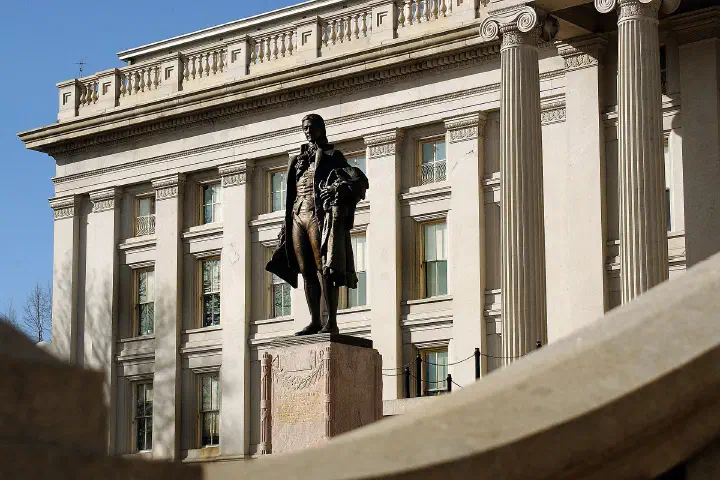
A $24 billion auction of 30-year US Treasuries drew weak demand and had to offer a hefty yield concession to clear. The bond vigilantes, investors who punish spendthrift governments by selling their debt, are back after three decades asleep. Their message to Washington was hard to miss.
How an auction shows strain
Treasury auctions do not fail outright; they clear at whatever yield is needed. The signal comes from the details. A tail, when the auction clears at a higher yield than the market was quoting just before it, shows that buyers had to be paid extra. A low ratio of bids to bonds on offer shows thin interest. The split between foreign and domestic investors bidding through dealers, those bidding directly, and the primary dealers who must take whatever is left shows who still wants the paper.
Dealers left holding the bonds
Primary dealers had to take an uncomfortably large share of the sale. That suggests the big buyers who used to take bonds at almost any price will no longer absorb endless supply of long-dated debt at these yields. The federal deficit is growing by trillions in a peacetime economy, and the market is imposing the discipline that politicians will not. A government that runs deficits without limit now pays for it at the next auction.
Dealers who are left with bonds must either hold them, using balance-sheet space that capital rules make expensive, or sell them in the secondary market over the following days. Either way the overhang weighs on prices, and the next auction starts from a weaker position. The ten-year yield briefly crossed 5 per cent on Monday for the first time since 2007, which shows how quickly one poor sale feeds into the wider market.
Who stopped buying
The missing buyers are familiar. The Federal Reserve, which bought trillions of dollars of Treasuries during the pandemic, is now letting up to $60 billion a month mature without replacing them. Foreign central banks, led by China, have been trimming their holdings, and Japanese investors earn little after paying to hedge the currency. American banks, chastened by the bond losses that brought down Silicon Valley Bank in March, are shrinking their securities portfolios. The buyers who remain, such as pension funds, insurers and hedge funds, care about price and will only take more at higher yields.
Supply is rising at the same moment. In August the Treasury increased the size of its longer-dated auctions for the first time since 2021, and it is expected to announce further increases at its refunding next week. The deficit is running at a level normally seen only in recessions or wars, while unemployment is below 4 per cent. The market has to absorb both more paper and the loss of its steadiest buyers.

Where the vigilantes came from
The term was coined by the economist Ed Yardeni in the 1980s to describe investors who sold bonds to protest against loose fiscal or monetary policy. Their heyday was the early 1990s. The Clinton administration built its 1993 deficit-reduction plan partly to win over a bond market that had punished heavy borrowing, and in 1994 a savage sell-off pushed long yields up sharply as the Fed raised rates. After that the vigilantes went quiet for the better part of three decades, as falling inflation, globalisation and, later, central-bank bond buying kept yields low regardless of deficits.
Britain offered a reminder last autumn. When the Truss government announced unfunded tax cuts in September 2022, gilt yields jumped so fast that pension funds using leveraged hedging strategies faced collateral calls, the Bank of England had to intervene, and the chancellor was sacked within weeks. America's position is far stronger, because the dollar is the world's reserve currency and Treasuries the benchmark safe asset, but that status does not exempt it from the price of supply.
Politics makes it worse
The timing of the auction was poor. The House of Representatives has been without a Speaker for three weeks, the government is funded only until mid-November, and Fitch downgraded America's credit rating in August, citing repeated standoffs over the debt limit. None of this raises the near-term risk of default, but it tells investors that no one in Washington is working to bring the deficit down. The vigilantes' demand for a higher term premium is, in part, a demand for a credible fiscal plan that no party is offering.
Why it might not last
The counterargument is that one weak auction is noise. Auctions have tailed before, and demand has returned once yields rose far enough to attract buyers with long-dated liabilities. The Treasury can also shift borrowing towards short-dated bills, which money-market funds absorb readily, and take pressure off the long end. A slowing economy would, in time, bring back investors seeking safety. Each of these could cap yields for a while. None changes the fact that the deficit must be financed and the price-insensitive buyers have gone.
The indicators to watch are the Treasury's refunding announcement on 1 November, the results of the ten- and thirty-year auctions that follow in November, and the dealer share of each. A rising dealer take-up would confirm that the market's capacity is being tested.
Washington can no longer treat Treasury auctions as a formality. Investors at the long end of the curve are charging for fiscal indiscipline, and each weak auction will push long-term borrowing costs a little higher, with mortgage borrowers and the Treasury's own interest bill paying most of the difference.
Write to Arnav Goel at contact@thelombardreview.com
The Sunday Edition, in your inbox
India's economy, markets and money every Sunday, plus our analysis twice a week. Free.
Unsubscribe any time. See our Privacy Notice.